Phil Ivey
United States
Phil Ivey stands as one of the most accomplished and universally respected figures in the history of poker. Across more than two decades of professional play, he has amassed eleven World Series of Poker bracelets, tens of millions in live tournament earnings, and a reputation for dominance in the highest-stakes cash games on the planet. Whether seated at a WSOP final table or grinding nosebleed sessions behind closed doors, Ivey has consistently demonstrated a level of skill and composure that sets him apart from virtually every other player in the game.
Early Life and Introduction to Poker
Phillip Dennis Ivey Jr. was born on February 1, 1977, in Riverside, California. His family relocated to Roselle, New Jersey, when he was young, and it was in the Garden State that Ivey first discovered his passion for cards. He grew up playing poker with his grandfather and quickly developed an intuitive feel for the game that went far beyond casual kitchen-table play.
By the time he turned eighteen, Ivey was already making trips to the casinos of Atlantic City. Using a fake identification card under the name “Jerome,” he gained access to the card rooms and began testing himself against experienced players. Those early sessions were formative. Ivey learned to read opponents, manage his bankroll under pressure, and adapt his strategy on the fly - skills that would later define his professional career. The transition from underage grinder to legitimate professional happened quickly once he reached legal gambling age, and he wasted no time making his presence felt on the tournament circuit.
Rise to WSOP Greatness
Ivey’s breakthrough on the national stage arrived at the 2000 World Series of Poker, where he captured his first bracelet in the $2,500 Pot-Limit Omaha event at just twenty-three years old. It was the beginning of a historic run. Over the following years, he added bracelets at a pace that stunned the poker community. His second and third bracelets came in 2002, including a victory in the $2,500 S.H.O.R.S.E. event that showcased his proficiency across multiple poker disciplines.
What made Ivey’s WSOP accomplishments particularly remarkable was the variety of games in which he triumphed. While many players specialize in No Limit Hold’em, Ivey collected bracelets in Pot-Limit Omaha, Seven-Card Stud, Omaha Hi-Lo, and mixed-game formats. By the time he earned his tenth bracelet, he had become the youngest player in history to reach that milestone, a record that underscored his extraordinary versatility. His eleventh bracelet, won in a $1,500 Eight-Game Mix event, further cemented his status as the most well-rounded tournament competitor of his generation.
Beyond bracelet victories, Ivey’s deep run in the 2009 WSOP Main Event captivated the poker world. He entered the November Nine as one of the most feared players at the final table, and millions tuned in to watch him navigate the pressure of poker’s biggest stage. Although he ultimately fell short of the championship, the performance reinforced his reputation as a player who could compete and excel under any circumstances.
Cash Game Dominance
While Ivey’s tournament resume alone would guarantee him a place in poker history, it is arguably his cash game prowess that truly separates him from his peers. For years, Ivey was a central figure in the legendary high-stakes games at Bobby’s Room inside the Bellagio, where the biggest names in poker gathered to play for pots that regularly exceeded six and seven figures. He later became a fixture in the private high-stakes games at the Aria Resort and Casino, consistently taking on - and beating - the wealthiest and most skilled players in the world.
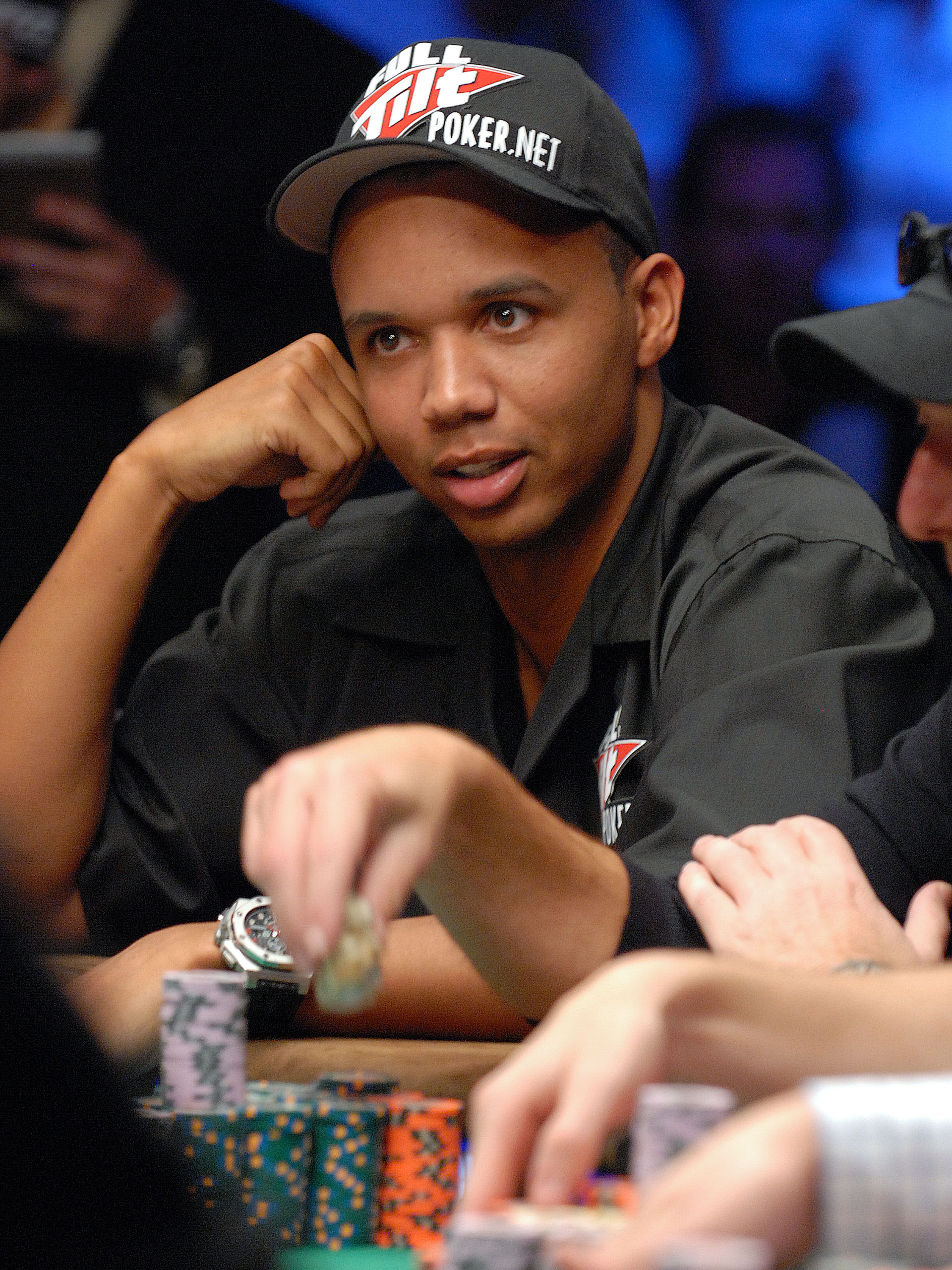
Online, Ivey was equally formidable. Playing under the screen name “Ivey” on Full Tilt Poker, he engaged in some of the highest-stakes sessions ever recorded on the internet. His battles against other elite players in heads-up No Limit Hold’em and Pot-Limit Omaha became the stuff of legend, with swings of millions of dollars occurring over single sessions. His willingness to play anyone, at any stakes, only added to his mystique.
Playing Style and Table Presence
Ivey’s playing style defies easy categorization. He is aggressive when the situation calls for it, capable of applying relentless pressure with well-timed bets and raises. Yet he is equally comfortable playing a patient, trap-heavy game when he senses that his opponents are overextending. His hand-reading ability is widely considered the best in the history of the game - a skill built on years of careful observation and an almost preternatural ability to process behavioral information in real time.
The so-called “Ivey stare” became one of poker’s most iconic images. When facing a critical decision, Ivey would fix his gaze on his opponent with an intensity that many found deeply unsettling. This ability to extract information through body language and timing tells gave him a significant edge in live play, particularly in high-pressure situations where lesser players might rely solely on mathematical calculations. His mastery of advanced bluffing techniques made him virtually unpredictable at the table, forcing opponents into difficult spots with alarming regularity.
Controversies and Legal Battles
Ivey’s career has not been without controversy. The most prominent incident involved a series of baccarat sessions at the Borgata Hotel Casino in Atlantic City and Crockfords Casino in London, where Ivey and a playing partner used a technique known as edge sorting to gain an advantage. Edge sorting exploits subtle asymmetries in the patterns on the backs of playing cards to identify high-value cards before they are dealt.
The Borgata sued Ivey for approximately $10.1 million in winnings, and a U.S. court ultimately ruled against him, finding that the technique constituted a breach of contract. In the United Kingdom, Crockfords withheld roughly $12 million in winnings, and the British courts similarly ruled that edge sorting fell outside the bounds of legitimate play. The cases sparked widespread debate within the poker and gambling communities about the line between skilled advantage play and cheating. Ivey maintained throughout the proceedings that he had not cheated and had simply used a legal technique to gain an edge - a position that many in the poker world found sympathetic, even if the courts disagreed.
Business Ventures and Industry Impact
Beyond the felt, Ivey has pursued a number of business interests connected to the poker world. He launched Ivey Poker, a social gaming platform and training site that aimed to bring his insights and strategies to a broader audience. He also served as one of the original members of “Team Full Tilt,” a group of elite players who represented Full Tilt Poker during the online poker boom of the mid-2000s, becoming one of the most recognized faces of internet poker during that era.
His endorsement deals, media appearances, and participation in televised cash games helped elevate poker’s profile during a critical period of growth for the industry. For many fans who discovered the game through television coverage, Ivey was the player they most wanted to watch - a quiet, focused competitor who let his results speak louder than words.
Legacy and Influence
Phil Ivey’s influence on modern poker is difficult to overstate. He proved that sustained excellence across multiple formats was not only possible but could be achieved at the very highest levels of competition. His career inspired countless players to study the game more seriously, to diversify their skill sets beyond a single variant, and to approach poker as a discipline requiring constant refinement.
Today, Ivey remains active in selective high-stakes events and cash games, continuing to test himself against the best players of the current generation. As the WSOP 2026 schedule approaches, many in the poker community hope to see him add to his remarkable bracelet collection. Whether he does or not, his place in the pantheon of poker greats is already secure. For a full look at upcoming events where legends like Ivey may compete, visit our tournaments page.
Few players in any competitive discipline can claim the kind of cross-format dominance, longevity, and respect that Phil Ivey has earned. He is, by virtually any measure, the greatest poker player of his generation - and a strong candidate for the greatest of all time.