Multi-barrel bluffing is one of the most powerful and feared weapons in a skilled poker player’s arsenal. While beginners learn to fire a single continuation bet, advanced players understand that real profit comes from constructing a coherent bluffing strategy across the flop, turn, and river. This guide covers the mathematics, board texture analysis, opponent profiling, and hand selection required to bluff effectively at every street.
The Mathematics of Bluffing
Every bluff is fundamentally a bet on your opponent folding. Before you fire a single chip as a bluff, you need to understand the math that determines whether that bluff is profitable.

Pot Odds and Fold Equity. When you bluff, you are risking a certain amount to win what is already in the pot. The key question is: how often does my opponent need to fold for this bet to break even?
The formula is straightforward: Break-even fold frequency equals your bet size divided by (your bet size plus the pot before your bet). If the pot is 10 big blinds and you bet 7 big blinds, your break-even fold frequency is 7 / (7 + 10) = 41 percent. If your opponent folds more than 41 percent of the time, your bluff is immediately profitable regardless of what you hold.
This calculation is the foundation of all bluffing decisions. Smaller bets need fewer folds to break even. A half-pot bet requires only 33 percent folds. A full-pot bet requires 50 percent folds. An overbet of 1.5 times the pot requires 60 percent folds.
Fold Equity Across Multiple Streets. Multi-barrel bluffing compounds fold equity. Suppose your opponent calls your flop bet 60 percent of the time. Of those who call the flop, perhaps 55 percent fold the turn. Of those remaining, 50 percent fold the river. Your opponent only reaches showdown about 27 percent of the time (0.60 times 0.45 times 0.50 = 0.135 - wait, let us recalculate correctly). Actually, 40 percent fold the flop. Of the 60 percent who call, 55 percent fold the turn (that is 33 percent of the original). Of the remaining 27 percent, half fold the river. Only about 13.5 percent of opponents see showdown. The combined fold equity across three streets is enormous, which is exactly why multi-barrel bluffs are so effective.
Range Construction for Bluffing: Choosing Bluff Candidates
Not all hands make good bluffs. Strong bluffing strategy depends on selecting the right hands from your range to bluff with.
Backdoor draws. On the flop, hands with backdoor flush draws or backdoor straight draws make excellent bluff candidates. For example, holding Ah9h on a Kd-7c-3h board gives you a backdoor flush draw. You can c-bet the flop, and if a heart comes on the turn, you gain additional equity while continuing your bluff. If you hit on the river, your bluff becomes a value hand.
Gutshot straight draws. Hands with four outs to a straight are strong semi-bluff candidates. Holding JT on a K-9-4 board gives you a gutshot to the nut straight with a queen. You can bet the flop as a bluff with roughly 8.5 percent chance of hitting the turn, plus fold equity.
Blocker effects. At the advanced level, hand selection for bluffs incorporates blocker analysis. Holding the Ah when the board shows three hearts on the river is powerful because you block the nut flush. Your opponent is less likely to have the nuts, making their calling range weaker. Similarly, holding an ace when the board is A-K-Q-J blocks your opponent’s strong top-pair and two-pair combinations.
Hands with no showdown value. A fundamental principle is that you should bluff with hands that cannot win at showdown. If you hold 6h5h on a Ks-Qd-8c-2s-7d board and missed everything, this hand has zero showdown value, making it an ideal bluff candidate. Hands with marginal showdown value, like bottom pair, are generally better checked down because they can occasionally win without betting.
Board Texture Categories
The texture of the community cards determines how credible your bluff story is and how likely your opponent is to have connected.

Dry boards (example: K-7-2 rainbow). These boards hit a narrow range of hands. If you raised preflop, the K-7-2 board connects with your perceived range (AK, KQ, KJ, AA, KK) far more than it connects with a caller’s range. Dry boards are excellent for c-betting because opponents frequently miss and must fold hands like suited connectors and small pairs. Recommended c-bet frequency on dry boards: roughly 70 to 80 percent.
Wet boards (example: 9h-8h-6d). These coordinated boards connect with many calling ranges. Hands like JT, T7, 78, flush draws, and overpairs all have strong connections to this board. Bluffing into wet boards is riskier because opponents hold more draws and made hands. You should be more selective with your c-bets and choose hands with equity (like flush draws and overcards). Recommended c-bet frequency on wet boards: roughly 50 to 60 percent.
Paired boards (example: K-K-5 or 8-8-3). Paired boards are interesting for bluffing because they make it unlikely that either player holds trips. A player calling a preflop raise rarely has K8 or 85 in their range. This means the board essentially “missed” most hands, and the preflop raiser’s perceived range advantage is strong. Recommended c-bet frequency on paired boards: roughly 60 to 70 percent, often using a smaller sizing since your opponent either has it or they do not.
Monotone boards (example: Jh-7h-3h). All three cards share a suit. Anyone with two cards of that suit has a flush, and many callers have single-card flush draws. These boards are tricky for bluffing because a large portion of calling ranges has a draw with significant equity. Be cautious and lean toward checking unless you hold the ace of the flush suit as a blocker.
Double Barrel Strategy: When to Fire the Turn
The second barrel is where many players lose their nerve or waste money. The turn is the most expensive street (bets are larger) and the street where your story must remain consistent.
Good turn cards to barrel. Overcards that complete your perceived range are ideal turn barrel cards. If the flop was 8-6-3 and the turn is an ace, you can represent AK or AQ that you raised preflop. Your opponent’s middle pairs and draws face enormous pressure.
Completing draws are another strong barrel trigger. If the flop was Jh-8d-4h and the turn is the 2h, the flush draw completed. Even if you do not have the flush, you can represent it convincingly if you bet the flop.
Scare cards that change the board dynamic are also effective. A king on the turn of a low board, or a card that creates a possible straight, forces your opponent to reconsider their hand.
Bad turn cards to barrel. Cards that improve your opponent’s likely calling range are poor barrel candidates. If the flop was K-9-4 and your opponent called, a 9 on the turn likely helps them more than you. Similarly, low cards that do not change the board (flop was Q-J-7, turn is a 3) give your opponent no reason to fold a hand they already called with.
Triple Barrel Bluffing: River Bluffs and Blocker Analysis
The river is the final decision point. There are no more cards to come, so all equity-based semi-bluffs have either hit or missed. River bluffs are pure bluffs and must be chosen with precision.
Blocker analysis in depth. The concept of blockers becomes paramount on the river. Suppose the board reads Kh-Qd-7h-3s-Ah, completing the heart flush. If you hold the Ah in your hand, you block the nut flush. Your opponent cannot have the Ah-Xh combination, which means a large portion of their strongest hands are impossible. This makes a river bluff with the Ah highly effective because the remaining hands in your opponent’s range are weaker.
Similarly, if the board is A-K-Q-J-4, holding a ten blocks the nut straight (a ten would give T-X the broadway straight). Your opponent is less likely to call with a straight because you hold a key card.
Sizing river bluffs. River bluffs typically need to be large enough to apply genuine pressure. A half-pot bet on the river only requires your opponent to fold 33 percent of the time, but it also gives them an attractive price to call with bluff-catchers. A bet of 70 to 100 percent of the pot requires 41 to 50 percent folds and puts real pressure on marginal holdings. Overbets (1.5x pot or more) can be devastating when your range is polarized and you hold the right blockers.
Opponent Profiling: Adjusting Your Bluffing Strategy
Not all opponents deserve the same bluffing strategy. Profiling your opponents and adjusting accordingly is the hallmark of an exploitative player.
Exploiting tight players (nits). Against opponents who fold too much, bluff relentlessly. These players wait for premium hands and surrender too many pots. Fire continuation bets on nearly every board, barrel the turn when they call, and do not be afraid to fire the river. A tight player who calls your flop and turn bets has a strong hand, so you can actually shut down the river bluff against them. But the key insight is that they fold so often on early streets that your bluffs are wildly profitable overall.
Dealing with calling stations. Against opponents who call too much, dramatically reduce your bluffing frequency. Calling stations pay off your value hands, so the adjustment is to value bet thinner and bluff less. Do not barrel the turn with air against a player who calls with any pair. Instead, check your bluff candidates and save your bets for when you have genuine hand strength.
Handling aggressive opponents. Against aggressive players who raise and three-bet frequently, you need to pick your bluff spots carefully. These players will put you to the test, so bluff with hands that have equity (semi-bluffs) rather than pure air. Also, be prepared to check-raise as a bluff, turning their aggression against them.
Specific Hand Examples
Example 1: Triple Barrel Bluff on a Dry Board. You open-raise from the cutoff with 6h5h. The big blind calls. Flop: Kd-8c-3s. You c-bet half pot. Your opponent calls. Turn: 2s. You fire 65 percent pot. Your opponent calls. River: Jd. The jack is a scare card that connects with your perceived range (you could have KJ, QJ, JJ). You fire 80 percent pot. Your opponent tanks and folds KT. Your triple barrel told a consistent story: you had a strong king or better, and the river jack made your story even more credible.
Example 2: Blocker-Based River Bluff. You raise preflop from the button with Ad4d. The big blind calls. Flop: Jh-8h-5c. You c-bet, opponent calls. Turn: 3h, completing the flush draw. You check behind to control the pot and disguise your range. River: 2s. Your opponent bets half pot. You raise to 3x their bet. You hold the Ad, which blocks the nut flush (Ah-Xh). Your opponent is extremely unlikely to have the nut flush and must now fold hands like Jx and even some flushes that are worried about the nut flush. This is an advanced river raise bluff exploiting blockers and your opponent’s fear of the nuts.
Example 3: Shutting Down Against a Calling Station. You open from the hijack with Qs-Js. A known calling station in the big blind calls. Flop: K-7-4 rainbow. You c-bet. They call. Turn: 9. Normally you might barrel, but this opponent calls with any pair and even ace-high. You check behind, take a free card, and hope to hit your gutshot or running cards. The river is a brick. You check behind again and lose to their 87 offsuit. This is the correct play. Barreling into a calling station with no equity is lighting money on fire. You saved two streets of bets.
Common Bluffing Mistakes
Bluffing too frequently. This is the most common error. Bluffing should complement your value betting range, not replace it. If you are bluffing every time you miss, observant opponents will adjust by calling more, and your bluffs become unprofitable.
Bluffing the wrong opponents. Firing three barrels into a player who never folds is the most expensive mistake in poker. Always profile your opponents before deciding to bluff. Save your multi-barrel bluffs for opponents who are capable of folding.
Sizing tells. Many players unconsciously use different bet sizes when bluffing versus value betting. They might bet smaller as a bluff (to “risk less”) or larger (to “scare” opponents). Consistent sizing across your value and bluff ranges is essential. Use the same sizing whether you have the nuts or complete air.
Telling an inconsistent story. Your bets across multiple streets must make sense as a coherent narrative. If you check the flop on a K-Q-J board and then suddenly bomb the turn and river, your line does not credibly represent a strong hand. Strong hands bet that flop. Make sure each barrel is consistent with the story you are telling.
GTO vs. Exploitative Bluffing
Game Theory Optimal (GTO) strategy constructs bluffing ranges that cannot be exploited regardless of your opponent’s strategy. A GTO approach typically bluffs at a frequency that makes your opponent indifferent between calling and folding. On the river with a pot-sized bet, GTO dictates bluffing with one bluff combination for every two value combinations (a 2:1 value-to-bluff ratio).
Exploitative bluffing deviates from GTO to maximize profit against specific opponents. Against a player who folds 70 percent of the time, you bluff more than GTO suggests because every bluff is highly profitable. Against a player who calls 80 percent of the time, you bluff less than GTO suggests and value bet more.
For most players below high stakes, an exploitative approach is more profitable because opponents have significant leaks. Focus on identifying who folds too much and who calls too much, then adjust accordingly. GTO serves as a useful baseline and safety net for situations where you lack information about your opponents.
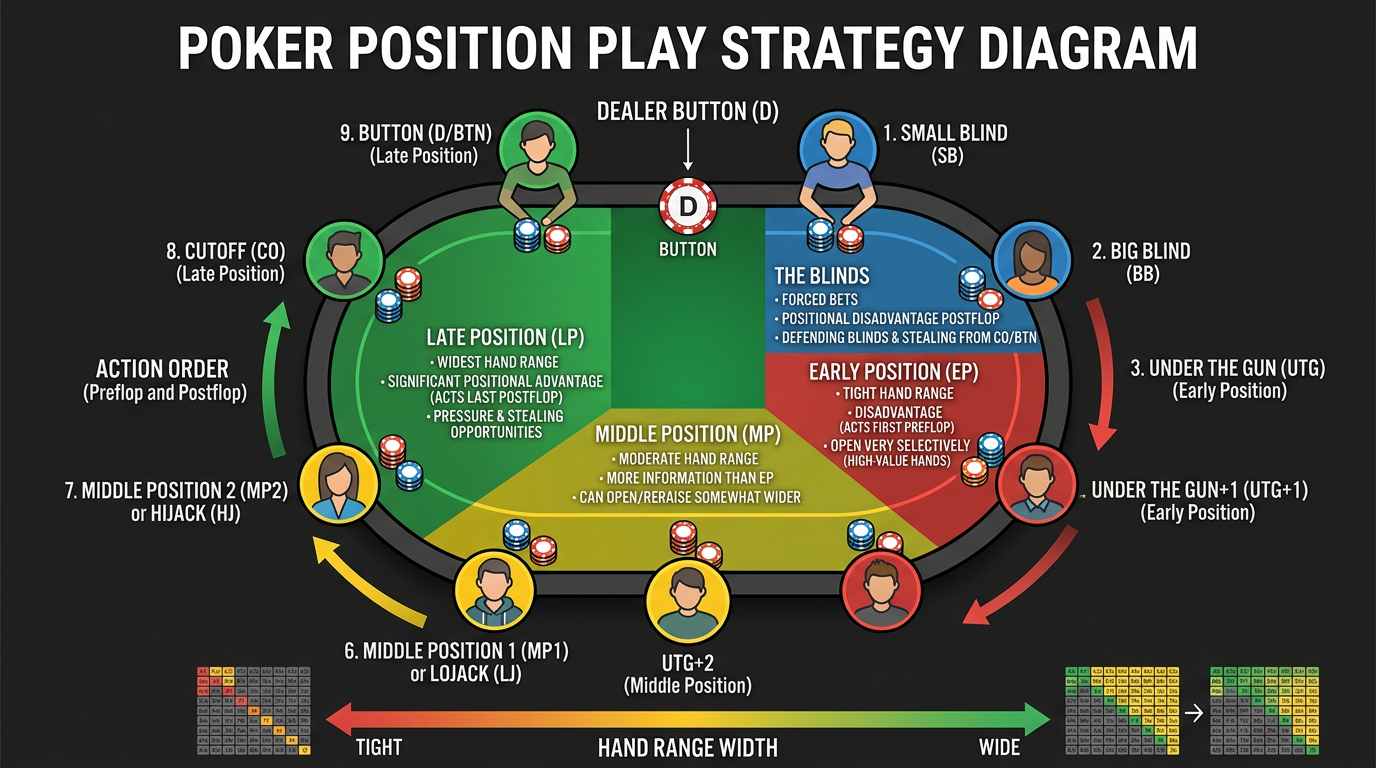
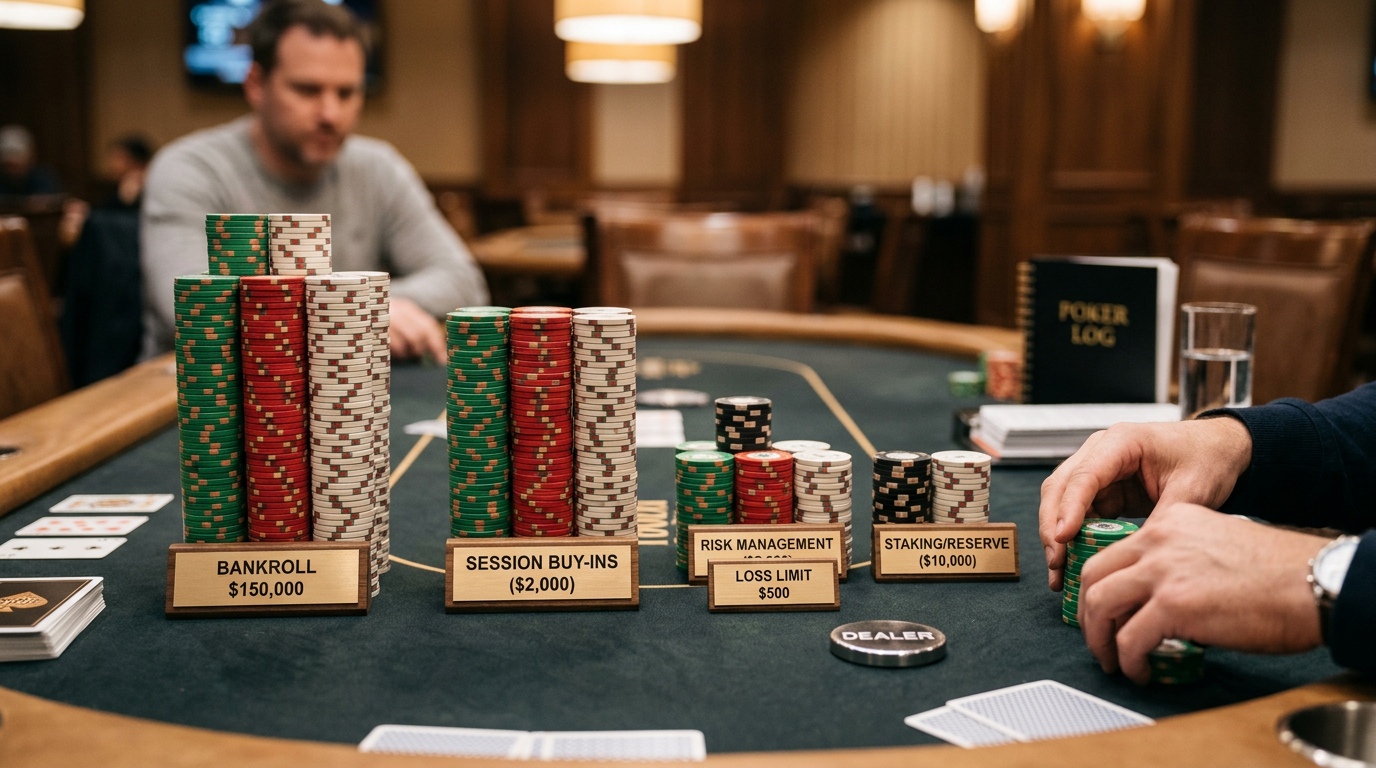
Bluffing is both an art and a science. The mathematics provides the framework, but reading opponents, selecting the right hands, and maintaining composure under pressure are skills that develop with practice and experience. To complement your bluffing game, study position play to ensure you are bluffing from the right seat at the table, and maintain disciplined bankroll management so that inevitable failed bluffs do not derail your progress. Some of the greatest bluffers in poker history, like Phil Ivey, built their reputations on precisely the techniques described in this guide.