Phil Hellmuth
United States
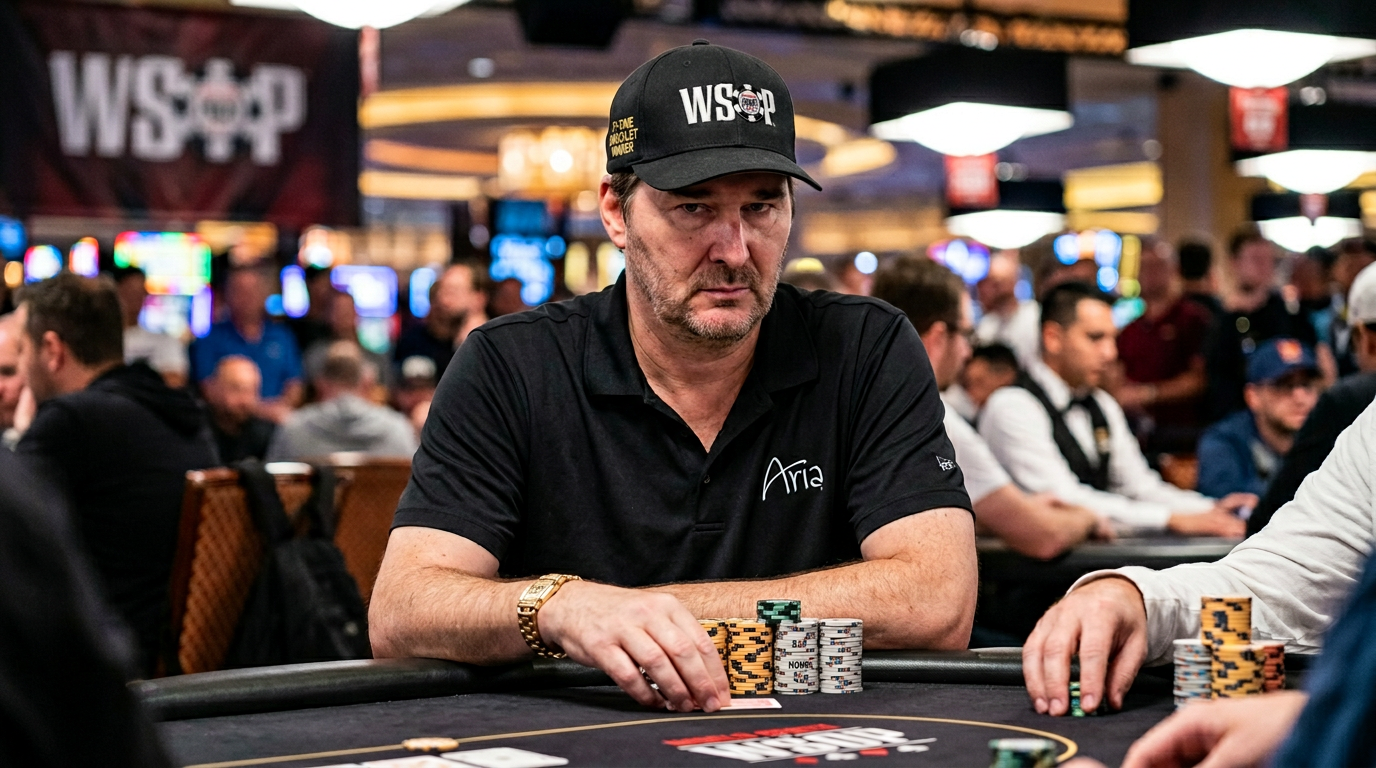
Phil Hellmuth holds a record that may never be broken. With seventeen World Series of Poker bracelets to his name, he stands alone atop the all-time leaderboard in poker’s most prestigious tournament series. His 1989 WSOP Main Event victory - achieved at the age of just twenty-four - announced the arrival of a generational talent, and the decades that followed have only reinforced his standing as one of the most accomplished tournament players in history. Equally famous for his emotional outbursts and his unapologetic self-confidence, Hellmuth has earned the nickname “The Poker Brat,” a label he has worn with a mixture of pride and self-awareness that has made him one of the most compelling characters in the sport.
Growing Up in Madison
Philip Jerome Hellmuth Jr. was born on July 16, 1964, in Madison, Wisconsin. He grew up in a large family - the oldest of five children - and was raised in an intellectually stimulating household. His father was a dean at the University of Wisconsin, and academics were valued highly in the Hellmuth home. Phil followed the expected path by enrolling at the University of Wisconsin, where he initially pursued a degree while playing poker on the side.
It did not take long for poker to become the priority. Hellmuth found himself drawn to the card rooms and home games around the Madison area, and his results quickly convinced him that he possessed something special. The decision to leave the university without completing his degree was difficult, particularly given his family’s emphasis on education, but Hellmuth was determined to test his abilities on the biggest stage. He packed up and headed for Las Vegas, driven by the conviction that he could compete with the very best players in the world.
The 1989 Main Event: A Star Is Born
Hellmuth’s defining moment arrived on November 14, 1989, when he sat down at the final table of the WSOP Main Event. At twenty-four years old, he was young, brash, and largely unknown to the broader public. The final table included Johnny Chan, the reigning two-time champion who was seeking an unprecedented third consecutive title. Chan was the overwhelming favorite, a colossus of the game against whom few believed a young upstart could prevail.
Hellmuth proved the doubters wrong in spectacular fashion. He played with a poise and precision that belied his age, and when the heads-up duel with Chan reached its climax, Hellmuth emerged victorious. The win made him the youngest Main Event champion in history at the time - a record he held for nearly two decades. More importantly, it launched a career that would redefine what sustained success at the WSOP looked like.
The victory was not simply a lucky run at a critical time. It was the first indication that Hellmuth possessed an extraordinary ability to perform under pressure in bracelet events, a skill that would become his defining characteristic.
Building the Bracelet Record
Following his Main Event triumph, Hellmuth embarked on a bracelet-collecting campaign that has no parallel in poker history. While other players have won multiple bracelets, no one has approached Hellmuth’s total of seventeen. He accumulated them steadily over a span of more than three decades, winning in a variety of No Limit Hold’em formats that showcased his mastery of the game’s most popular variant.
His bracelet victories span an enormous timeline. From the early 1990s through the 2020s, Hellmuth continued to find ways to navigate massive tournament fields and emerge with the gold. Several of his victories came in events with thousands of entrants, requiring sustained excellence over multiple days of play. Others came in smaller, more exclusive fields where the concentration of talent was exceptionally high. In both settings, Hellmuth demonstrated the ability to make correct decisions at critical junctures - a skill that separates great tournament players from merely good ones.
The pursuit of each new bracelet became a narrative in itself. Poker fans and media tracked his progress obsessively, with every deep run generating speculation about whether number sixteen, seventeen, or beyond was within reach. Hellmuth himself fueled the drama with bold predictions and unwavering confidence in his ability to keep winning, no matter how competitive the fields became.
The Poker Brat Persona
No discussion of Phil Hellmuth is complete without addressing his famous temperament. Hellmuth’s emotional reactions at the poker table - ranging from theatrical complaints about bad beats to full-blown tirades directed at opponents he feels have played a hand poorly - have made him one of the most polarizing figures in the sport. His outbursts have been captured on camera countless times, generating viral clips and becoming an inseparable part of his public identity.
The “Poker Brat” persona is complex. On one level, it reflects a genuinely competitive personality that takes every loss personally and struggles to accept unfavorable outcomes with equanimity. Hellmuth has been open about the fact that his emotional reactions are not entirely performative; he truly believes that he plays the game at a level that should produce even more victories than he has achieved, and the gap between expectation and result can produce explosive frustration.
On another level, the Brat persona has been extraordinarily effective as a brand-building tool. Hellmuth’s memorable outbursts have kept him in the public eye for decades, generating attention and media coverage that more reserved players could never attract. He has leveraged this visibility into endorsement deals, book sales, speaking engagements, and a level of mainstream name recognition that few poker players have achieved. Whether audiences love him or find him exasperating, they watch - and that attention has been central to Hellmuth’s success off the felt.
Playing Style: Tight, Aggressive, and Patient
Beneath the theatrics lies a deeply disciplined poker player. Hellmuth’s approach to tournament poker is built on a foundation of tight-aggressive play, with a particular emphasis on reading opponents and making big folds when the situation demands it. His willingness to lay down strong hands - guided by his reads on an opponent’s range and behavior - has saved him countless chips over his career and allowed him to survive deep into tournaments with greater consistency than almost any player in history.
Hellmuth has described his style as one focused on “playing the player” rather than relying on pure mathematical optimization. While the modern game has shifted heavily toward game-theory-optimal strategies driven by solver analysis, Hellmuth has maintained that his exploitative approach - identifying opponents’ tendencies and adjusting accordingly - remains effective, particularly in live tournament settings where physical tells and timing information are available.
For players interested in understanding how positional awareness contributes to a tight-aggressive strategy, our ultimate guide to position play explores many of the concepts that underpin Hellmuth’s approach to navigating hands from different seats at the table.
Author, Brand Builder, and Media Presence
Hellmuth’s influence extends well beyond the tournament circuit. He is the author of several poker books, most notably “Play Poker Like the Pros,” which became a bestseller and introduced foundational poker concepts to a generation of casual players. His writing style mirrors his personality - confident, opinionated, and accessible to readers who may not have extensive experience with the game.
As a brand, Hellmuth has been remarkably savvy. His trademark grand entrances at WSOP events - arriving in costume, accompanied by entourages, and making theatrical displays for the cameras - have become an anticipated part of the tournament calendar. These spectacles, combined with his frequent appearances on poker telecasts and podcasts, have kept Hellmuth relevant and marketable through multiple eras of the game.
He has also ventured into the business side of poker, investing in technology and exploring opportunities in the broader gaming industry. His ability to monetize his fame and personality has set a template that younger players have sought to emulate, recognizing that poker success alone is rarely sufficient to build lasting financial security.
Why He Keeps Competing
A question that frequently arises about Hellmuth is why he continues to compete at such a high level. With seventeen bracelets, a Main Event title, and nearly $29 million in live earnings, he has nothing left to prove. Yet Hellmuth returns to the WSOP every summer with the same intensity and determination that characterized his earliest appearances.
The answer, by his own admission, is rooted in his competitive nature and his belief that more bracelets are within reach. Hellmuth has spoken publicly about his desire to reach twenty bracelets - a milestone he views as a legacy-defining achievement that would place his record even further beyond the reach of future competitors. The pursuit of that number keeps him studying, training, and showing up ready to battle in events where many of his opponents are decades younger.
As the WSOP Main Event 2026 draws near, Hellmuth will once again be among the most closely watched players in the field. Whether he is adding to his record or delivering another memorable outburst, his presence elevates any tournament he enters. The Poker Brat remains as relevant and compelling as ever, driven by the same hunger that propelled a twenty-four-year-old from Madison, Wisconsin, to the summit of poker’s biggest stage.
Legacy
Phil Hellmuth’s place in poker history is secure. His seventeen WSOP bracelets represent a standard of tournament excellence that may never be matched. His Main Event victory at twenty-four demonstrated that fearlessness and conviction could overcome experience and reputation. And his decades-long career has shown that sustained competitiveness at the highest level is possible for those willing to put in the work, even as the game evolves around them.
For a complete look at the players who have shaped poker’s competitive landscape, visit our player rankings. Hellmuth’s record stands as a monument to what relentless ambition, paired with genuine talent, can achieve over the long arc of a career in professional poker.