
The WSOP just rolled out their new dealer rating system, and let me tell you, I haven’t seen the poker community this split since the whole four-card flop debacle last week.
After talking to dozens of players and dealers over the past 48 hours (including a very heated conversation in the Brasilia room hallway at 2am), it’s clear this thing has touched a nerve way deeper than anyone at Caesars anticipated.
The Players Are Not Happy
Some of the biggest names in poker are already weighing in, and they’re not holding back.
“This is absolutely insane,” tweeted Daniel Negreanu yesterday. “We’re here to play poker, not run a Yelp review service for dealers. What’s next, rating the cocktail waitresses?”
But here’s where it gets interesting. Not all the pros hate it.
Shaun Deeb, who’s been grinding every bracelet event he can get into, told me over coffee this morning: “Look, I’ve had the same dealer mess up pot sizes three times in one orbit. If this gets them to pay attention, I’m all for it.”
The cash game grinders are particularly vocal. One regular in the $25/$50 game (who asked not to be named because “I don’t need dealers remembering my face”) put it bluntly: “You think I want to rate someone handling $100K pots? That’s a recipe for disaster.”
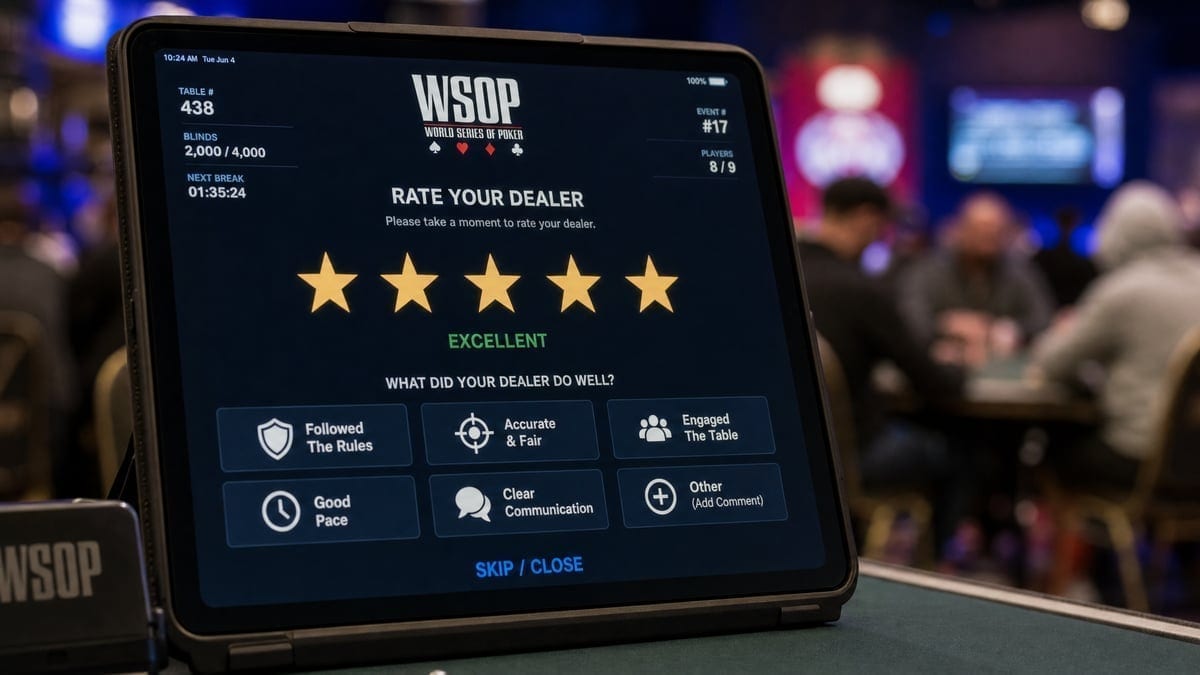
Dealers Fight Back
The dealer break room is basically a war zone right now.
I spent an hour there yesterday (thanks to my friend Lisa who’s been dealing the Series for 15 years), and the mood ranged from resigned to furious. One dealer, shuffling cards obsessively while we talked, said: “Twenty-three years I’ve been doing this. Now some kid who learned hold’em on an app is gonna rate me because I don’t smile enough?”
The mixed game dealers are especially worried. “You try explaining Badugi rules to someone who’s never played it, then watch them give you one star because they’re tilted,” said another veteran dealer.
But – and this surprised me – some younger dealers actually support it. A first-year dealer working the daily deepstacks told me she thinks it could help: “The good dealers will rise to the top. Maybe we’ll finally get recognized for doing a tough job well.”
Tournament Directors in the Middle
The floor staff? They’re caught in an impossible position.
One TD I’ve known since the Binion’s days pulled me aside during a break: “Sarah, this is going to be a nightmare. We already have enough drama without turning every table into a customer service survey.”
Another TD sees it differently. “We track everything else – entries, buy-ins, prize pools. Why not dealer performance?” (Though he admitted he’s already had three formal complaints about the system itself.)
The shift supervisors are bracing for impact. I overheard one telling his team: “Just do your job like always. The ratings will work themselves out.” The eye roll from his dealers said everything.
Industry Veterans Sound the Alarm
I called Matt Savage, who’s been running tournaments longer than most of us have been playing. His take? “This opens a can of worms we might not be able to close. What happens when a dealer gets consistently low ratings? Do they lose shifts? Their jobs?”
Linda Johnson, longtime advocate for dealers’ rights, was even more direct when we chatted at the media desk: “This is going to create a toxic environment. Dealers will be afraid to enforce rules, afraid to call the floor, afraid to do anything that might upset a player.”
The online sites are watching too. A GGPoker executive (speaking off the record) mentioned they’ve considered similar systems but always backed off: “The human element makes it too volatile. Online, we can track dealer efficiency through data. Live? It becomes a popularity contest.”
The Data Tells a Different Story
What’s really fascinating. I got my hands on some early numbers (don’t ask how), and they’re revealing patterns nobody expected.
Dealers working the bigger buy-in events are getting notably higher ratings than those in smaller tournaments. Coincidence? The $1,500 events are averaging 3.2 stars. The $10Ks? 4.1 stars.
Mixed game dealers are all over the map. PLO dealers seem to be doing okay (3.8 average), but the Stud and Draw game dealers are getting hammered (2.9 average).
Most telling: dealers on the late night shifts are getting way worse ratings than day shift. Correlation with alcohol consumption? You be the judge.
What Happens Next
The WSOP says they’re “monitoring feedback and will make adjustments as needed.” Translation: they’re in full damage control mode.
Several dealers told me they’re considering organizing formal protests. The players are split between those gaming the system (“I give everyone five stars so they’ll remember me positively”) and those refusing to participate at all.
One thing’s becoming clear after watching this unfold all week: this system might not survive the Series. Too many conflicting interests, too much potential for abuse, too much bad blood being created. The WSOP wanted data on dealer performance. Instead, they’ve created a social experiment that’s revealing way more about human nature than anyone bargained for.
The real question isn’t whether the system will change. It’s how much damage gets done before it does.


