
The dealer in Seat 5 at Table 442 was having a rough night. Players kept asking him to repeat the action. His pitch landed short twice. And now someone was typing furiously on their phone.
“You rating me?” he asked the kid in the hoodie.
The kid didn’t look up. Just kept typing.
Digital Report Cards Hit the Felt
That scene’s playing out across the Rio this summer. The WSOP rolled out a player-driven dealer rating system that’s got the poker world arguing louder than a three-way all-in dispute.
Think Uber ratings, but for the person pitching cards at your table. Players can now score dealers on speed, accuracy, and professionalism through the WSOP app. The numbers go straight to management.
Some players love it. Finally, they say, a way to reward the dealers who keep games moving and punish the ones who can’t count a pot to save their lives.
Others hate it with the passion of someone who just got coolered by pocket threes.
The Money Problem Nobody Wants to Discuss
What makes this whole thing complicated: dealer pay.
WSOP dealers make around $12-15 per hour base. The real money comes from tips. A good dealer working a busy cash game can clear $300-500 per shift in tips alone. Tournament dealers? Different story. They’re pooling tips, splitting them across hundreds of dealers. The math gets ugly fast.
Now add ratings to the mix.
If your rating drops below a certain threshold, you might find yourself dealing the 2am Omaha tournament instead of the Main Event Day 1. That’s the difference between decent tips and going home with lint in your pockets.
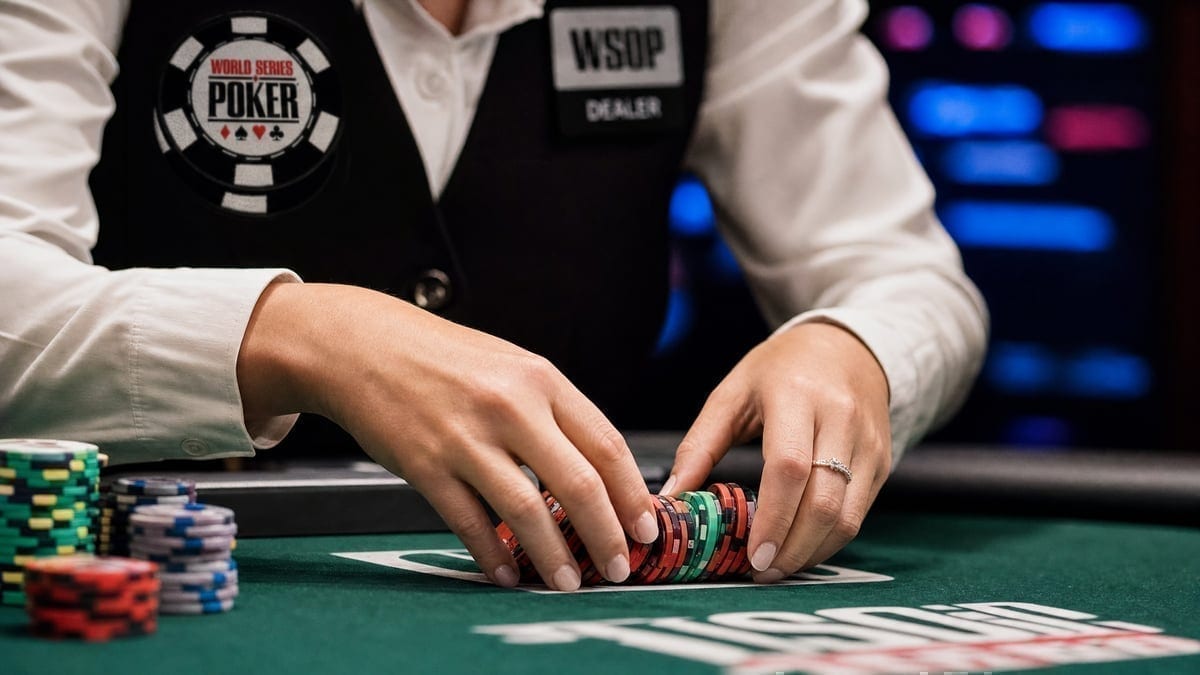
I dealt for two summers before writing became my thing. The stress of keeping games moving while players argue about everything from exposed cards to string bets - it grinds you down. Now imagine doing that while knowing every player has a digital scorecard in their pocket.
Players Already Gaming the System
Three weeks into the Series, patterns emerged.
Some players threaten bad ratings to get rulings they want. “Give me that pot or you’re getting one star.” Others use ratings as weapons after bad beats. Dealer pushes you a cooler? One star. Never mind that dealers don’t control the cards.
The flip side exists too. Dealers suddenly becoming extra chatty with big stacks. Remembering every regular’s name. One dealer told me he started bringing breath mints after getting dinged for “unprofessional presentation.”
“It’s like dealing for Yelp reviews,” said a 20-year dealer who asked to remain anonymous. “I’m not here to be your friend. I’m here to run a clean game.”
What the Numbers Actually Show
WSOP released some data last week. Average dealer rating: 4.2 out of 5. Not bad, right?
Dig deeper though.
Ratings skew heavily by event type. Main Event dealers average 4.6. Daily deepstack dealers? 3.8. The correlation between buy-in size and dealer rating is almost perfect. Rich players give better ratings. Shocking.
Geographic patterns too. European players rate significantly lower than Americans. Asian players barely use the system at all. One dealer joked that he could predict his rating based on the table’s passport composition.
The Transparency Argument Falls Apart
Proponents keep saying this brings “transparency” to dealer performance. But transparent for whom?
Players don’t see individual dealer ratings. Dealers don’t see their own ratings broken down by category. Only management gets the full picture. That’s not transparency - that’s surveillance dressed up in Silicon Valley clothes.
Real transparency would mean:
- Publishing dealer pay scales
- Showing how tips get distributed
- Revealing how ratings affect scheduling
- Letting dealers respond to ratings
None of that’s happening.
Where This Actually Leads
Forget the feel-good talk about “improving dealer performance.” This system exists for one reason: labor cost management.
Low-rated dealers get fewer hours. Fewer hours means they find other jobs. WSOP doesn’t have to fire anyone - they just schedule them into quitting. Clean. Efficient. Legally bulletproof.
Meanwhile, the “good” dealers - the ones who smile through the abuse and remember everyone’s coffee order - they’ll burn out faster than ever. Because now they’re not just dealing cards. They’re performing customer service theater for tips AND ratings.
The European Poker Tour tried something similar in 2018. Killed it after one stop. The dealers threatened to walk. The World Poker Tour floated the idea in 2019. Players revolted before cards hit the felt.
But this is Vegas. And the WSOP. Different rules apply when you’re the biggest game in town.
Some dealers adapted already. They’re treating it like any other variance - just another swing to manage. The smart ones figured out the meta-game: deal fast, talk less, never correct a player who’s wrong about the rules if they’re a big tipper.
The rating system’s not going anywhere. Too much data flowing in. Too many management metrics to track. Too convenient a tool for cutting costs without looking like the bad guy.
So next time you sit at a WSOP table and the dealer seems a little too eager to please, a little too worried about that misdealt card, remember - they’re not just dealing for tips anymore. They’re dealing for their digital reputation. One misclick at a time.


