
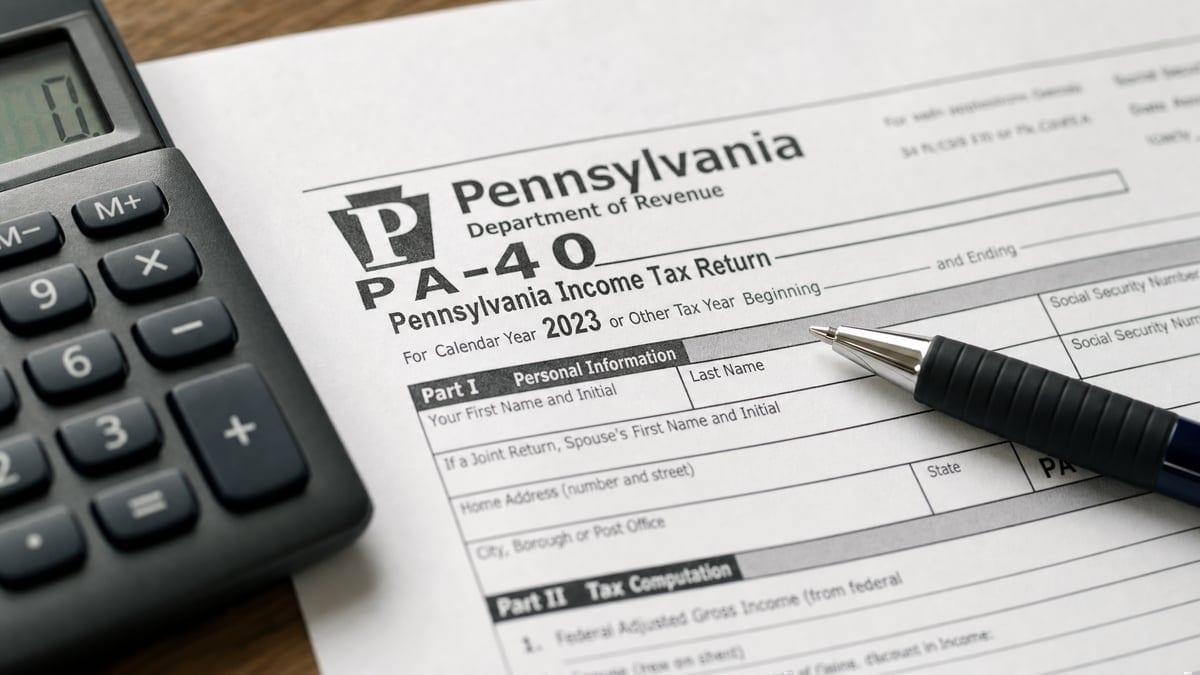
Pennsylvania’s online poker players have 17 days left to take advantage of the state’s tax amnesty program before facing potential audits and penalties that could reach 25% of unreported winnings.
The amnesty window, which opened December 15, 2025, allows players to voluntarily disclose previously unreported gambling income without facing criminal prosecution or the standard 5% accuracy penalty. After June 15, the Pennsylvania Department of Revenue will begin matching player accounts with state tax filings using data obtained through interstate compacts.
The $47 Million Question
Pennsylvania collected $312.4 million in online gaming tax revenue during 2025, with poker contributing approximately 15% of that figure. But state auditors estimate another $47 million in taxable poker winnings went unreported based on operator payment data.
The discrepancy stems from confusion over tax obligations. Many recreational players assume online operators withhold taxes automatically, similar to brick-and-mortar casinos reporting jackpots over $1,200. Online poker operates differently - players must self-report all net winnings as gambling income.
“We’re seeing significant uptake in the amnesty program,” says Marcus Williams, spokesperson for the PA Department of Revenue. “About 8,400 applications have been processed since December, with the majority coming from poker players who genuinely didn’t understand their reporting obligations.”
Cross-State Data Sharing Changes Everything
The real enforcement teeth come from Pennsylvania’s participation in the Multi-State Internet Gaming Agreement (MSIGA). Starting July 1, member states will share player data including:
- Account holder identities matched to Social Security numbers
- Annual deposit and withdrawal totals
- Net winning/loss statements from operators
- Tournament prize distributions over $600
Michigan and New Jersey already share this data. Pennsylvania’s addition means the three largest regulated poker markets can cross-reference player income across state lines.
For multi-state grinders, the implications multiply. A Pennsylvania resident who played on BetMGM Poker in New Jersey or PokerStars in Michigan now faces exposure across all three jurisdictions. The states have agreed to share audit findings, meaning one state’s investigation could trigger reviews in others.
Professional Players Face Retroactive Audits
The amnesty program covers tax years 2019-2024, coinciding with Pennsylvania’s online poker launch. But professional players - defined as those deriving over 50% of income from poker - face stricter scrutiny.
State auditors have already flagged 147 high-volume accounts showing six-figure profits with no corresponding tax filings. These players can still use the amnesty program but must pay full back taxes plus interest, currently set at 8% annually. For a player who netted $100,000 in unreported 2019 winnings, the total bill approaches $140,000.
The state has hired forensic accountants specializing in gambling income reconstruction. They’re particularly interested in players who:
- Maintained accounts across multiple operators
- Showed consistent monthly profits exceeding $5,000
- Participated in high-stakes games ($25/$50 and above)
- Received operator promotional payments or rakeback deals
Market Impact Already Visible
Pennsylvania online poker revenue dipped 11% in April compared to March, breaking a 14-month growth streak. While operators cite seasonal factors, the timing suggests tax concerns are affecting player behavior.
BetRivers Poker, which doesn’t share liquidity across state lines, reports a 7% increase in new Pennsylvania accounts since the amnesty program began. Players appear to be segregating their play to individual states, possibly to simplify tax reporting or limit audit exposure.
The high-stakes games have seen the most dramatic shifts. The $25/$50 PLO games that ran regularly on PokerStars PA have disappeared entirely. The biggest games now peak at $10/$20, and those struggle to maintain consistent action.
“The ecosystem above $5/$10 has essentially collapsed,” notes one regular who requested anonymity. “Between the tax situation and players moving out of state, there’s just no liquidity.”
Several prominent Pennsylvania grinders have already relocated to Nevada or Florida, neither of which taxes gambling winnings. The exodus includes at least two players ranked in the state’s top 10 by online tournament earnings.
What Happens After June 15
Once the amnesty window closes, Pennsylvania will begin systematic audits using operator-provided data. The state has budgeted $3.2 million for gambling tax enforcement, including hiring 12 additional auditors.
Players caught with unreported income face:
- Back taxes on all winnings
- Interest charges from the original due date
- 5% accuracy penalty on underpaid amounts
- Potential criminal charges for willful tax evasion
- Automatic triggers for federal IRS review
The state has indicated it will prioritize cases involving over $25,000 in unreported income or patterns suggesting intentional evasion. But even recreational players with modest unreported winnings could face audits if their names appear in the operator data matches.
For Pennsylvania poker players, the message is clear: disclose now or risk significant financial consequences. The state’s poker market may never fully recover from the dual impact of tax enforcement and player migration, fundamentally altering what was once a thriving ecosystem.


