
Prime Time Poker’s Corporate Crossroads
The conference room at CBS headquarters probably smelled like expensive coffee and calculated risk when executives greenlit the Creator Poker Championship. After decades of poker living on cable networks and streaming platforms, America’s most-watched network just dealt itself into a game that could reshape how mainstream media views the sport.
Tonight’s two-part premiere represents a $3.2 million production investment, according to sources familiar with the budget. That’s triple what ESPN typically spends on WSOP coverage and signals CBS isn’t just dipping a toe into poker content – they’re diving into the deep end with both feet.
But the real story isn’t the money. It’s what happens when traditional broadcast economics collide with poker’s evolving audience dynamics.
The Creator Economy Meets Felt Economics
Creator TV Sports, the production company behind tonight’s show, built their business model around a simple premise: internet personalities drive viewership more reliably than traditional celebrities. Their previous ventures generated average viewership of 1.8 million across streaming platforms, numbers that caught CBS’s attention during a period when linear TV ratings continue their steady decline.
“We’re not making a poker show,” Creator TV Sports CEO Michael Sugar told investors during a February conference call. “We’re making an entertainment product that happens to feature poker.”
The cast reflects this philosophy. King Bach brings 25 million TikTok followers. Soy Nguyen commands 3.8 million YouTube subscribers. Billy Love’s Instagram reach tops 5 million. Combined, the eight creators appearing tonight control a social media audience larger than the entire viewership of last year’s WSOP Main Event broadcast.
World Poker Tour CEO Adam Pliska sees this as validation of a strategy shift that began in 2023. “Traditional poker programming appeals to maybe 800,000 core viewers,” Pliska explained in an interview last month. “Creator-driven content opens doors to 80 million potential viewers who’ve never watched a poker show.”
Production Values Tell the Financial Story
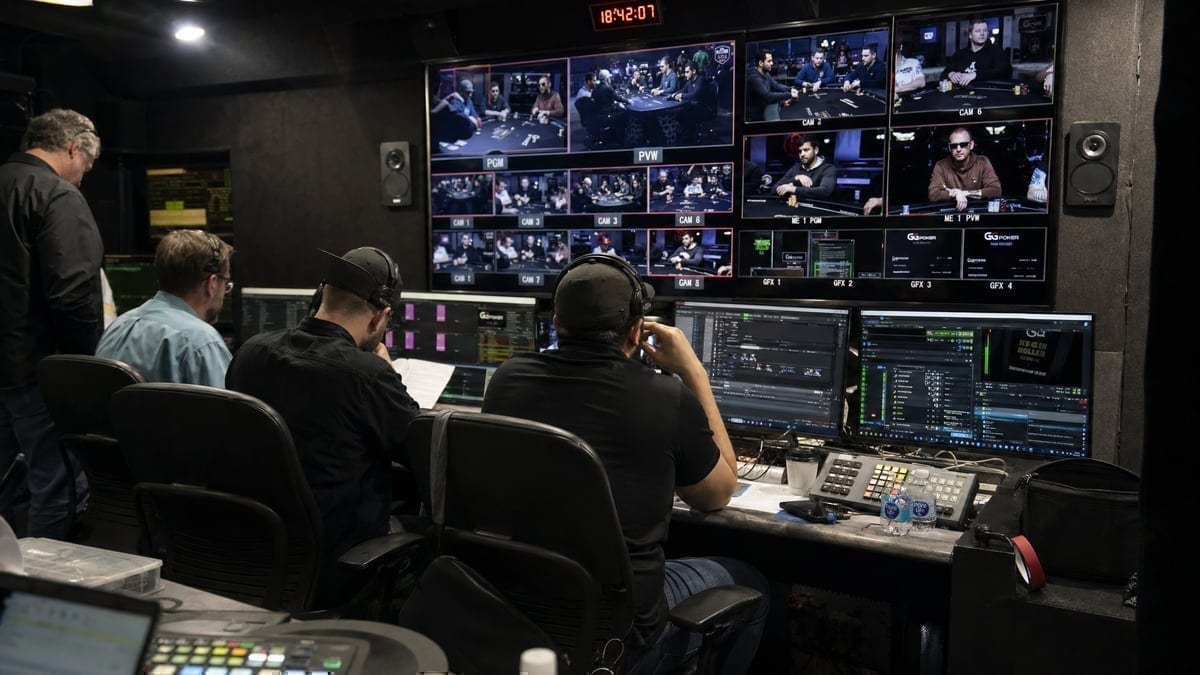
Inside the Luxor’s dedicated studio, 14 cameras capture every angle – more than double the standard poker broadcast setup. The production team includes 47 crew members, compared to the 18-person crews typical for streaming poker shows. Post-production alone consumed 1,200 hours, transforming December’s eight-hour livestream into tonight’s tightly edited 90 minutes of television.
These numbers matter because they represent a fundamental bet on poker’s commercial viability. CBS’s advertising rate card shows 30-second spots during tonight’s broadcast selling for $65,000, roughly 40% below their prime time drama rates but significantly above what poker typically commands on cable networks.
Early advertiser interest suggests the gamble might pay off. FanDuel purchased four minutes of advertising time. DraftKings bought three minutes. Even non-gaming brands like State Farm and Toyota signed on, attracted by the creator demographics rather than poker itself.
The Platform Migration Economics
December’s livestream version pulled 342,000 concurrent viewers on YouTube and Twitch, generating roughly $180,000 in platform advertising revenue. Tonight’s CBS broadcast needs 2.1 million viewers to hit network benchmarks for the time slot – a 6x multiplier that would typically seem impossible.
Except the math changes when creators activate their audiences.
Data from Creator TV Sports shows their talent’s social media posts drive 3.7x more tune-in conversion than traditional TV marketing. King Bach’s single TikTok about tonight’s show has already generated 4.2 million views. If even 5% of those viewers tune in, CBS hits their target number from one social media post.
This represents a seismic shift in poker’s media economics. Instead of relying on existing poker fans discovering broadcasts, the creator model flips the equation – bringing massive audiences to poker rather than bringing poker to audiences.
Revenue Structures Reveal Strategic Thinking
The financial architecture behind Creator Poker Championship hints at poker’s evolving business model. Creator TV Sports retains 100% of digital rights, planning to monetize the content across streaming platforms after the CBS exclusive window expires. CBS keeps traditional advertising revenue but shares sponsorship income 60-40 with the production company.
Participating creators receive appearance fees ranging from $25,000 to $75,000 based on follower counts, plus performance bonuses tied to social media engagement metrics. The winner takes home $100,000, but creators can earn up to $50,000 more through audience activation bonuses.
This structure incentivizes everyone to promote the broadcast, creating a marketing multiplier effect that traditional poker shows can’t match. When Phil Hellmuth appears on televised poker, he promotes to his 180,000 Twitter followers. When King Bach promotes tonight’s show, he reaches 140 times that audience.
Market Timing and Competitive Positioning
CBS’s move comes as poker content fragments across platforms. PokerStars concentrates on streaming. GGPoker invests in user-generated content. The WPT, traditionally focused on linear TV, now sees creator partnerships as essential to survival.
“We’re in an attention economy,” notes digital media analyst Rebecca Chen from Forrester Research. “Poker competes not just with other poker content but with every form of entertainment available on someone’s phone. Creator-driven content solves the discovery problem.”
The timing also capitalizes on poker’s pandemic-driven growth. Online poker revenue increased 43% since 2020, but that growth hasn’t translated to television viewership. Traditional poker shows average 220,000 viewers, down 31% from pre-pandemic levels despite more people playing the game.
Risk Factors and Reality Checks
Not everyone’s convinced the creator model translates to tournament poker. Professional player Doug Polk questioned the concept on his podcast: “Poker’s entertainment value comes from understanding the strategy. Can you maintain that while catering to audiences who don’t know pot odds?”
The December livestream offered mixed signals. While total viewership impressed, average watch time clocked in at just 23 minutes – far below the 67-minute average for traditional poker broadcasts. Viewers tuned in to support their favorite creators but didn’t necessarily stick around for poker strategy discussions.
Tonight’s edited format attempts to address this, condensing eight hours into 90 minutes of what producers call “story-driven poker entertainment.” Whether that satisfies poker purists or creator fans remains tonight’s biggest question.
The Broader Industry Implications
If Creator Poker Championship delivers CBS’s viewership targets, expect rapid industry evolution. WPT already has three more creator events in development. PokerGO executives recently met with Creator TV Sports about potential partnerships. Even the traditionally conservative WSOP has posted job listings for a “Creator Relations Manager.”
The economics make sense. Traditional poker sponsorships value at roughly $12 per thousand viewers. Creator-integrated sponsorships command $45-60 per thousand viewers, according to influencer marketing platform GRIN. That 4-5x premium changes poker’s entire revenue model.
For poker rooms and online sites, creator content offers something even more valuable than viewership: new player acquisition. GGPoker reports creator-driven campaigns generate 7x higher new player sign-ups than traditional advertising. In an industry where customer acquisition costs average $480 per player, creator content becomes a profit center rather than marketing expense.
The infrastructure investments tell the real story. CBS didn’t just buy a poker show – they built a production model that assumes creator-poker hybrid content becomes a recurring format. The Luxor studio remains configured for poker production. Creator TV Sports hired 12 full-time staff focused solely on poker content. The WPT restructured their entire media division around creator partnerships.
These aren’t experiments anymore. They’re business model transitions betting that poker’s future audience comes from TikTok rather than ESPN, from YouTube rather than cable subscriptions, from creator parasocial relationships rather than pure poker skill appreciation.
Tonight’s ratings will either validate that bet or force a rapid strategy reversal. Either way, poker content will never look quite the same again.


