
The setup looks perfect - ring lights positioned just right, microphones tested, overlays ready. But when Jake “JCarver” Cody hits the “Go Live” button these days, barely 200 viewers show up. The British pro who once commanded audiences of 15,000 during poker’s streaming golden era now streams to empty chatrooms.
“I’m done,” Cody announced last Tuesday, not with fanfare but with a simple Discord message. “The juice isn’t worth the squeeze anymore.”
He’s not alone. In the past six months, over forty established poker content creators have either gone dark or dramatically scaled back their streaming schedules. From mid-stakes grinders to bracelet winners, the exodus reads like a who’s who of poker’s streaming pioneers.
The Numbers Tell the Story
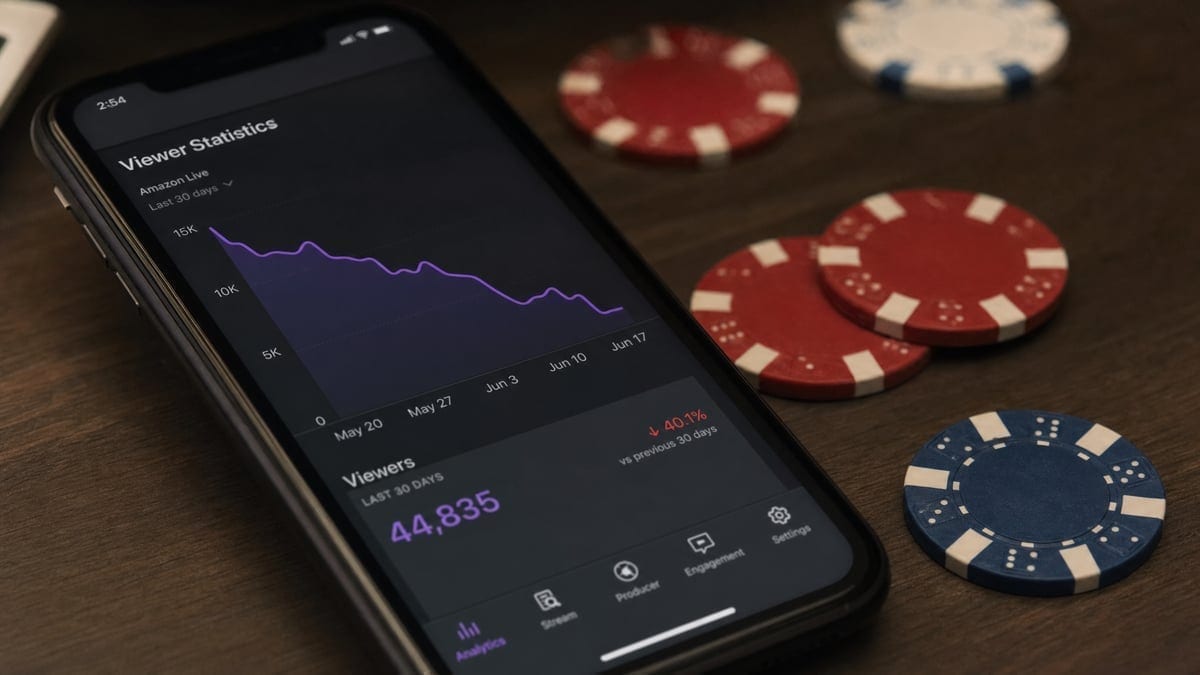
Streaming platform data paints a grim picture. Poker viewership on Twitch has dropped 68% since its 2021 peak. YouTube Gaming fares slightly better, down only 45%, but engagement metrics - the stuff that actually pays bills - have cratered even harder.
“We’re seeing 10-hour streams pulling in less revenue than a minimum wage job,” explains Marcus Rodriguez, who ran analytics for several major poker streamers before pivoting to esports content. “And that’s before you factor in equipment costs, editing time, thumbnail design.”
The math is brutal. A poker streamer averaging 500 concurrent viewers might earn $400-600 monthly from subscriptions and donations. Factor in YouTube ad revenue (if they’re dual-streaming), and you might hit $1,200. For 160 hours of live content.
Algorithm Changes Hit Hard
Twitch’s January algorithm update felt like a gut punch to poker creators. The platform now heavily favors “discoverable” content - think explosive reactions, constant commentary, visual chaos. Poker, with its contemplative pauses and strategic depth, got buried.
“They want Fortnite energy from a game that requires actual thinking,” says Sarah Chen, who shut down her PLO-focused channel in March after four years of consistent streaming. “I tried adding sound effects, hype moments, costume changes. My audience hated it. The algorithm loved it but pushed me to viewers who’d leave after thirty seconds.”
YouTube’s not much better. Their 2025 push toward Shorts means long-form poker content gets minimal homepage exposure.
Where Are They Going?
Some streamers are finding refuge in unexpected places. Kevin Martin launched his subscription-based Poker Wars reality show, bypassing traditional platforms entirely. Others have joined private Discord communities, streaming to smaller but more engaged audiences willing to pay premium subscriptions.
“I make triple what I made on Twitch,” admits one high-stakes regular who requested anonymity. “Streaming to 50 people who each pay $99 monthly beats entertaining 2,000 freeloaders.”
The real money, varios (several) creators discovered, lies in selling their streaming infrastructure to live poker venues. Those overlays, camera setups, and production workflows developed for personal streams? Casinos and poker rooms desperately need them for their own broadcasts.
The Human Cost
Beyond financials lurks a darker reality - creator burnout has reached epidemic proportions.
Dr. Patricia Menendez, who studies content creator mental health at NYU, sees patterns. “Poker streamers face unique challenges. They’re performing while making high-stakes decisions. They’re educating while competing. They’re entertaining while potentially losing money. It’s unsustainable.”
The stories are heartbreaking. Streamers talk about relationship breakdowns, sleep disorders, anxiety attacks triggered by viewer counts. One prominent creator developed a gambling problem, chasing losses on stream to “give viewers action.”
Live Poker’s Streaming Boom
Ironically, as individual creators flee, corporate poker streaming thrives. Hustler Casino Live regularly pulls 20,000+ viewers. PokerGO’s subscriptions hit record numbers. The appetite for poker content remains - viewers just prefer produced shows over personal streams.
“We hired twelve former Twitch streamers this year,” reveals a PokerGO executive. “They understand engagement in ways traditional TV producers don’t.”
This shift fundamentally changes poker’s media scene. Instead of hundreds of unique voices, we’re moving toward a handful of major productions. The democratization of poker content that streaming enabled? It’s reversing.
What Comes Next
For surviving streamers, adaptation means specialization. Generic mid-stakes grinding streams are dead. Successful creators now occupy specific niches - solver analysis, beginner education, entertainment-first content that happens to include poker.
“I stopped calling myself a poker streamer,” explains Alex Foxen’s streaming coach. “We’re content creators who happen to play cards. That mental shift changes everything.”
But even specialists struggle. The golden era when anyone with OBS and a webcam could build an audience? That door has slammed shut.
Veteran creator Jamie Staples, one of poker streaming’s founding fathers, summed it up during his final stream: “We caught lightning in a bottle for a few years. Now the storm’s moved on.”
For poker media, that storm’s aftermath leaves an industry transformed. Centralized, corporatized, and increasingly distant from the grassroots community that built it. The cameras still roll, the hole cards still show, but something indefinable - call it authenticity, call it connection - got lost in the transition from bedroom streams to studio productions.
The poker world keeps spinning, cards keep falling, but the voices calling the action? They’re moving on to games with better odds.


