
Texas Poker’s Newest Player
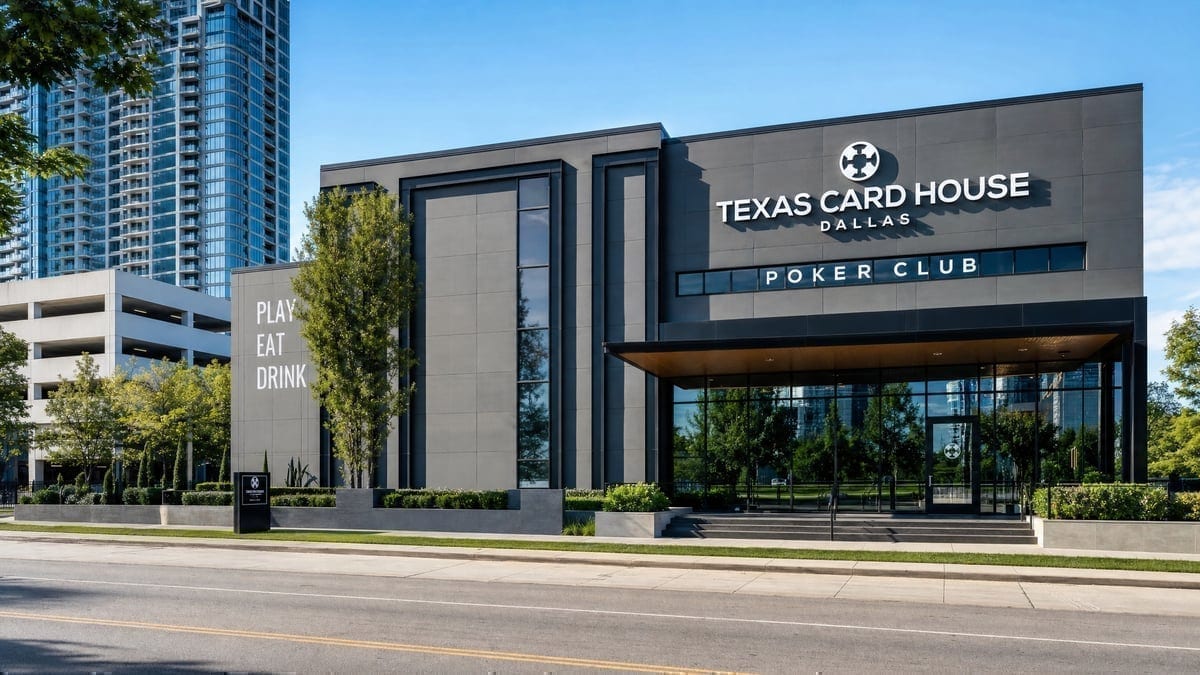
Champions Social Club pulled off what many thought impossible - opening a major poker room in Dallas despite fierce opposition from local regulators. The 30-table facility launched operations this week after winning several court battles that threatened to derail the project entirely.
The club’s journey to opening day reveals much about the current state of Texas poker regulation. While Houston and Austin operators have found relatively smooth sailing, Dallas has emerged as a battleground where every new room faces scrutiny from city officials wary of gambling expansion.
The Numbers Behind the Victory
Champions invested $4.2 million into the Dallas facility, according to public filings. That figure dwarfs typical Texas card room investments, which usually run between $1-2 million for a standard 15-20 table operation. The extra capital went toward legal fees ($840,000), enhanced security systems ($320,000), and what the club calls “community integration initiatives” ($180,000).
These community programs proved major. Champions pledged 2% of gross revenue to local charities and guaranteed 150 jobs with starting wages of $18/hour plus tips. Compare that to minimum wage positions at most card rooms.
The business model follows Texas’s social club structure - members pay monthly dues ($30-50) rather than rake on individual pots. Champions projects 3,000 members within six months based on pre-launch signups. At $40 average monthly dues, that’s $1.44 million in annual membership revenue before considering tournament fees and food/beverage sales.
Why Dallas Fights Harder
Dallas presents unique challenges for poker operators that don’t exist in other major Texas cities. The city council passed stricter zoning requirements in 2023 that effectively banned card rooms from opening within two miles of schools, churches, or residential neighborhoods. That eliminates roughly 85% of commercially viable locations.
Champions found a loophole - they’re technically in Farmers Branch, a Dallas suburb with friendlier regulations. But Dallas fought the location anyway, arguing the club would draw traffic and crime into Dallas proper. The legal battle centered on whether Dallas could regulate businesses outside city limits based on projected impact.
A state appeals court sided with Champions in March, ruling cities cannot extend regulatory authority beyond their borders absent specific state legislation. This precedent could open doors for other operators to follow Champions’ suburban strategy.
Market Dynamics Shifting Fast
Texas now hosts 67 licensed poker rooms generating approximately $180 million in annual revenue, based on industry estimates. The Dallas-Fort Worth metroplex accounts for $45 million of that total across 12 existing rooms. Champions projects it will capture 15-20% market share within its first year.
But the real story isn’t market share - it’s market expansion. Texas poker rooms don’t primarily compete against each other. They compete against Oklahoma casinos, underground games, and home poker. Champions’ research shows 65% of their pre-launch members have never played in a Texas card room before.
This mirrors what happened when Lodge Card Club opened in Austin. Rather than cannibalizing existing rooms, Lodge grew the overall market by attracting recreational players who previously avoided poker rooms entirely. Champions CEO Michael Torres worked at Lodge before launching this venture, bringing those market-expansion strategies north.
What This Means for Texas Poker
Champions’ victory sends a clear signal to potential operators: Dallas can be cracked with the right approach. Expect to see more clubs targeting suburban locations just outside major city limits. The legal precedent combined with proven economics makes this strategy increasingly attractive.
For players, more competition means better games and amenities. Champions launches with features typically reserved for Las Vegas rooms - professional dealers, auto-shufflers on every table, tableside dining, and a full sports book (for entertainment purposes only, of course). Other Dallas rooms will need to upgrade or risk losing market share.
The timing also matters. With GGPoker breaking online traffic records and live poker revenue surging nationwide, investor appetite for poker ventures has never been stronger. Champions secured funding from three private equity groups who see Texas as poker’s next frontier.
Regulatory battles won’t disappear overnight. Several Texas cities are pushing for statewide legislation to give municipalities more control over card room operations. But for now, Champions has shown that determined operators with deep pockets can navigate even the toughest local opposition. Their suburban strategy might just become the template for Texas poker’s next growth phase.


