
Texas Card Room Market Adds Major Player
Champions Social Club officially opened for business in Dallas this week, marking the latest expansion in Texas’s booming poker economy. The club’s launch comes after months of regulatory battles and represents a $4.2 million investment in the North Texas market.
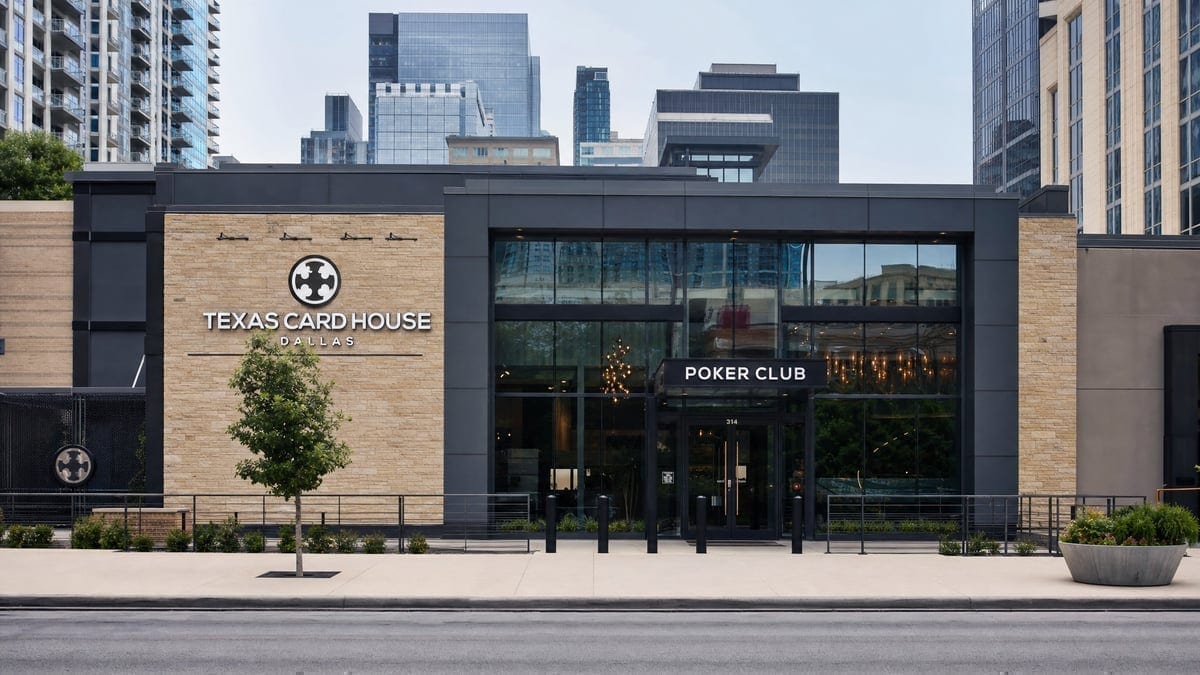
The new venue enters a competitive scene where established operators like Texas Card House and The Lodge Card Club have already staked out significant market share. But Champions’ backers are betting that Dallas’s poker economy has room for another major player, particularly one targeting the premium segment of the market.
Revenue Model Built on Membership Economics
Champions operates under Texas’s social club model, which requires careful navigation of state gambling laws. Members pay a $50 daily fee or $300 monthly for unlimited access. The club generates additional revenue through hourly seat rentals ranging from $13 to $18 depending on stakes.
This pricing structure positions Champions above most competitors. Texas Card House charges $10-$15 hourly, while The Lodge typically runs $12-$16. The premium pricing reflects Champions’ strategy of targeting higher-stakes players and offering enhanced amenities.
The club’s financial projections suggest they need approximately 180 active daily players to break even on operational costs. Industry data from similar Texas venues indicates this target should be achievable within 90 days if Champions can capture even 8% of the Dallas-Fort Worth poker market.
Legal Hurdles Shaped Opening Strategy
Champions’ path to opening wasn’t smooth. The club faced three separate legal challenges from local residents concerned about traffic and property values. These battles delayed the opening by four months and added an estimated $340,000 in legal fees to the startup costs.
The regulatory environment in Texas remains complex. Card rooms operate in a gray area where poker is legal if the house doesn’t take a rake from pots. Instead, venues charge membership fees and hourly seat rentals. This model has survived multiple legal challenges but requires careful compliance.
Champions hired former Texas Gaming Commission advisor Robert Chen (no relation) to ensure their operating procedures meet state requirements. Chen’s involvement signals the club’s commitment to long-term sustainability rather than quick profits.
Market Dynamics Favor Expansion
The Dallas-Fort Worth metroplex represents the largest poker market in Texas by player count. Recent data from poker room aggregator PokerAtlas shows the region supports 14 active card rooms with combined daily traffic exceeding 2,200 players.
Live poker revenue in Texas grew 34% year-over-year in 2025, according to industry tracking firm Poker Market Intelligence. This growth rate surpasses every regulated US market except Michigan. The expansion is driven by several factors:
Players from neighboring states drive significant traffic. Oklahoma residents account for roughly 20% of Dallas poker room revenue. Louisiana and Arkansas players contribute another 12% combined.
Corporate relocations to Texas have brought new players with higher discretionary income. Tech sector migrations from California particularly impact the high-stakes game ecosystem.
Texas’s lack of state income tax creates additional disposable income compared to regulated markets like California or New York. A professional player earning $100,000 annually keeps approximately $7,000 more in Texas than they would in California.
Champions Targets Premium Segment
The club’s amenities reveal their market positioning. Champions offers valet parking, a full restaurant with tableside service, and private high-stakes rooms with dedicated staff. These features mirror successful models in unregulated markets like Florida rather than traditional casino poker rooms.
While venue will spread games from $1/$3 no-limit hold’em up to $25/$50, with PLO offerings planned once player liquidity stabilizes. Management expects the $5/$10 and $10/$25 games to generate 65% of total revenue based on competitor data.
Champions also announced partnerships with several poker training sites to offer free member workshops. This educational component serves dual purposes – attracting newer players while demonstrating commitment to promoting poker as a skill game rather than gambling.
The poker room spans 15,000 square feet with 30 tables initially. Expansion space exists for 20 additional tables if demand materializes. Each table features USB charging ports, cup holders, and professional dealers trained at Champions’ own academy.
Staffing represents the largest operational challenge. The tight labor market in Dallas has pushed dealer wages to $30-$40 hourly including tips at competing rooms. Champions is offering guaranteed $35 hourly base plus tips to attract experienced dealers.
The opening of Champions Social Club signals continued confidence in Texas’s unregulated poker market despite periodic legislative threats. A bill to ban poker rooms died in committee during the last session, but operators know the regulatory risk remains. Champions’ significant capital investment suggests their backers believe the current model will persist for years to come.


