
The Flight Manifest
Masato Yokosawa counted heads one more time. 290 Japanese poker players, all bound for Vegas, all chasing the same dream. The YouTube star had organized charter flights before, but nothing like this. An entire Boeing 787 Dreamliner, every seat filled with someone who could calculate pot odds in their sleep.
“We sold out in 72 hours,” Yokosawa told me over Line from Tokyo. The ZIPAIR charter leaves June 28, lands at McCarran, and deposits its cargo of card players directly into the heart of the WSOP. Round trip: ¥198,000. About $1,300. That’s before the buy-ins.
And those buy-ins add up fast.
By the Numbers
The 290 players on this flight represent Japan’s largest organized WSOP expedition ever. Previous record? 127 players in 2019. But that was scattered across multiple airlines, multiple arrival dates. This is different. This is coordinated.
Consider the bankroll requirements. Average Japanese player at the Series fires 3.4 events, according to data from GGPoker’s satellite tracking. At an average buy-in of $2,100, that’s $7,140 per player just for tournament entries. Multiply by 290 players: we’re looking at $2 million in tournament buy-ins from a single flight.
Then there’s accommodation. Food. Transportation. Japanese players typically budget $8,000-12,000 for a two-week WSOP trip. Conservative estimate puts the total economic impact of this one charter at $3.5 million.
That’s real money flowing into Vegas from a country where poker exists in legal grey zones.
The Yokosawa Effect
Three years ago, Masato Yokosawa was grinding $2/$5 games in underground Tokyo clubs. Today his YouTube channel hits 400,000 subscribers. His WSOP vlogs from 2025 averaged 2.3 million views each. In Japan, that makes him bigger than most TV poker shows ever were.
“YouTube changed everything,” says Akira Ohyama, who finished 175th in last year’s Main Event. “Before Yokosawa, maybe 20 Japanese players went to WSOP each year. Now look.”
The numbers back him up. Japanese entries in WSOP events:
- 2019: 341 total entries
- 2021: 112 (pandemic)
- 2023: 578
- 2024: 894
- 2025: 1,426
That’s a 316% increase in six years. And 2026 projects even higher.
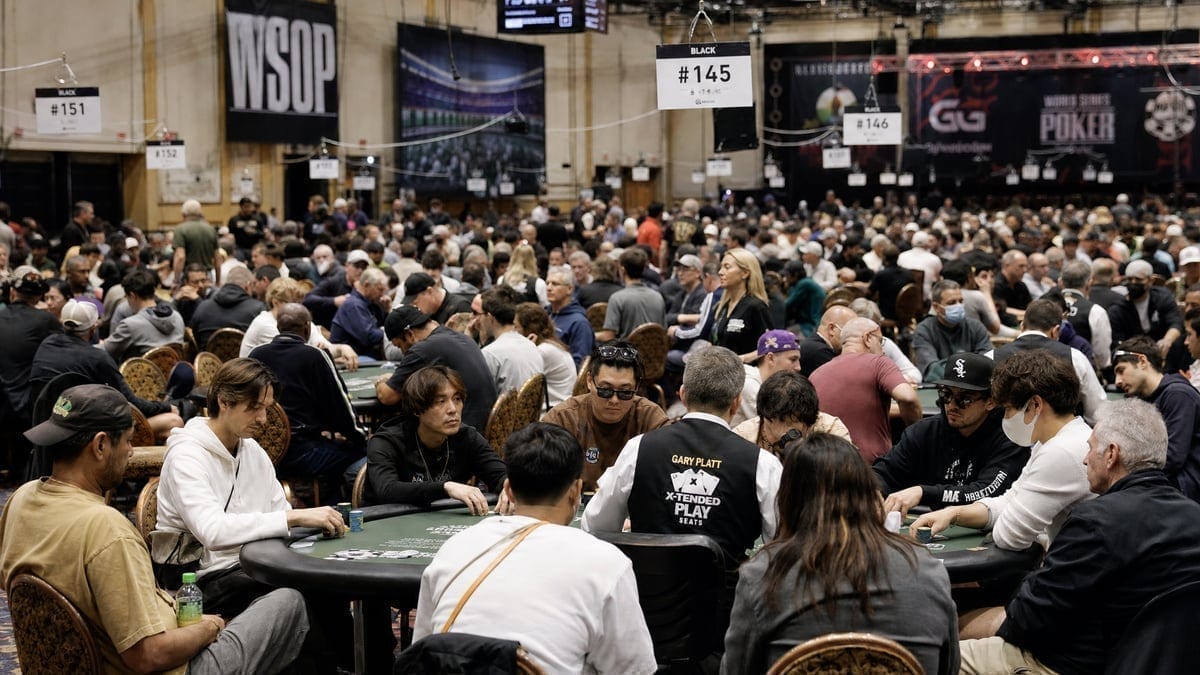
Legal Limbo, Sky-High Stakes
What makes this fascinating: poker remains technically illegal in Japan. No casinos. No card rooms. Online poker operates in shadows. Players access international sites through VPNs. Home games stay underground. The entire Japanese poker economy exists outside the law.
Yet here’s a Boeing 787 full of players heading to the world’s biggest legal poker festival.
“Japanese players are incredibly studied,” notes Doug Polk, who faced several during his November Nine run. “They show up prepared. They know GTO. They’ve run the simulations.”
The preparation shows in results. Japanese players cashed 147 times at the 2025 WSOP, up from 89 in 2024. Their collective winnings topped $4.2 million. Not bad for a country where you can’t legally spread a poker game.
The Package Deal
ZIPAIR’s poker package includes more than just the flight. Yokosawa negotiated group rates at Paris Las Vegas. Arranged shuttle buses from McCarran. Even set up a dedicated Line group for real-time tournament updates.
“It’s like a poker cruise, except we’re flying,” laughs Hiroshi Nakamura, making his third WSOP trip. He’s budgeted $15,000 for this adventure. Plans to play eight events, including the Main Event.
Nakamura isn’t alone in his ambition. Survey data from the charter group shows:
- 84% plan to play the Main Event
- Average events per player: 5.2
- 31% are first-time WSOP players
- 12% qualified through online satellites
That last number might seem low, but remember: playing online poker in Japan requires jumping through hoops. VPNs. Cryptocurrency. Foreign bank accounts. Every satellite they play carries legal risk.
Beyond the Numbers
At Narita Airport, late June, 290 poker players will board a plane together. They’ll share bad beat stories at 38,000 feet. Compare ranges over airline food. Maybe run a sit-n-go in the back rows.
By the time they land in Vegas, they’ll have formed alliances. Backing arrangements. Plans to share taxis to different events. A community forged at altitude.
“This isn’t just about poker,” Yokosawa explains. “It’s about showing the world that Japan takes this game seriously.”
Seriously enough to fill a 787.
The Bigger Picture
Japan’s poker boom mirrors trends across Asia. South Korea sends increasing numbers to Vegas each summer. Taiwan’s poker community explodes on social media. The Philippines hosts major stops on the Asian Poker Tour. But Japan’s growth stands apart. Bigger numbers. Better organization. More money.
The irony isn’t lost on industry observers. Countries where poker is illegal often produce the most dedicated players. Maybe it’s the forbidden fruit effect. Maybe underground games breed tougher competitors. Maybe YouTube transcends borders in ways traditional poker media never could.
Whatever the reason, 290 Japanese players will descend on Vegas this summer. They’ll play tight. They’ll study hard. They’ll take their shots at bracelets.
Some will cash. Most won’t. That’s tournament poker. But they’ll all fly home with stories. And those stories, shared on YouTube and Line and Twitter, will inspire next year’s group. Which might need a bigger plane.
The real question isn’t whether Japan will legalize poker. It’s whether Vegas is ready for what’s coming. Because if 290 players can fill one plane, what happens when Yokosawa charters two?
Or three?
The June 28 ZIPAIR flight takes off at 5:20 PM Tokyo time. Lands in Vegas at 11:35 AM Pacific. Just enough time to check in, grab food, and late register for the 2 PM daily deepstack at Horseshoe.
Which is exactly what most of them plan to do.


