
Vivian Saliba was three-betting KK87 double-suited when the message popped into her chat. “Why are you playing kings so aggressively in PLO?” The question came from a regular in her $25/$50 game who’d been watching her demolish the field for two hours straight.
She typed back: “Because everyone plays them wrong.”
That exchange happened six months ago. Since then, the Brazilian pro has turned her counterintuitive approach to PLO kings into a masterclass that’s reshaping how smart players think about poker’s most overplayed starting hand.
The 85% Problem Nobody Talks About
Here’s a number that should terrify you: 85% of PLO players lose money with pocket kings over their lifetime. Not in cooler spots. Not in tough games. Overall.
Saliba discovered this while analyzing her database of 2.8 million hands. Kings showed a negative win rate for almost every player in her sample. Including crushers.
“People see KKxx and their brain shuts off,” she explained during a recent coaching session. “They think it’s hold’em. They think they have the nuts pre. Both wrong.”
The math backs her up. In hold’em, pocket kings win about 18% of the time in a nine-handed game that goes to showdown. In PLO? That number drops to 11%. And that’s assuming you’re playing them correctly.
Why Your Brain Lies About Kings
Saliba’s breakthrough came from studying neuroscience papers on pattern recognition. Turns out our brains are hardwired to overvalue pairs because of our hold’em backgrounds.
“Watch someone get dealt kings in PLO,” she said. “Their pupils dilate. Heart rate spikes. Same physiological response as AA in hold’em. But the equity gap is massive.”
She started tracking her own sessions with a heart rate monitor. Sure enough, her pulse jumped 15-20 BPM whenever she picked up cowboys. Even after years of playing professionally.
The solution? Treat them like what they are: a decent starting hand that needs help. Not a monster.
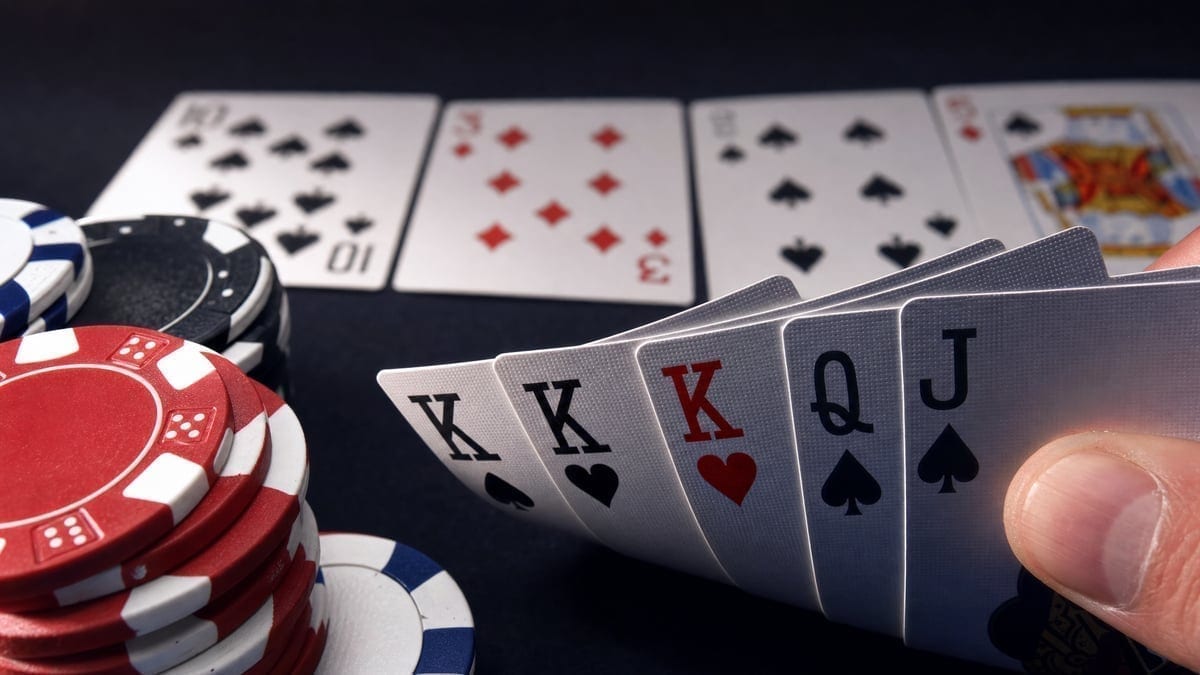
The Three Rules That Changed Everything
After identifying the problem, Saliba developed three simple rules that transformed her kings from losers to winners:
Rule 1: No 3-betting KKxx rainbow “Flat or fold. Never 3-bet garbage kings.” The pot odds rarely justify building a pot with a hand that flops so poorly.
Rule 2: Position matters more than suits She’ll 3-bet KK76 single-suited on the button but fold KKT9 double-suited UTG. Position trumps everything with marginal holdings.
Rule 3: The two-street rule If you can’t envision playing for stacks on two different board textures, fold pre. Kings need multiple paths to victory.
When Saliba Shocked the High Stakes Regs
Last month, she folded KKQ9 single-suited to a 4-bet in a $50/$100 game. The chat exploded. “How can you fold kings to one raise?”
But she’d noticed the 4-bettor only squeezed with AAxx or premium rundowns. Against that range, her kings were torched. The EV of folding was zero. The EV of calling was -$3,200.
“People think folding kings is weak,” she said. “I think losing money is weak.”
The same player who criticized her fold later admitted he was down six figures lifetime with pocket kings. All from situations where he knew he was behind but couldn’t let go.
The Database Doesn’t Lie
Saliba’s most convincing argument comes from cold data. She analyzed winning players across three major sites and found:
- Only 23% show profit with KKxx hands
- Average loss rate: -14.5bb/100
- Worst performers: KK22-KK77 rainbow (averaging -31bb/100)
- Best performers: KKT9 double-suited (+8.7bb/100)
Even more shocking? Players who fold kings preflop 15%+ of the time show better overall win rates than those who never fold them.
“The best players aren’t playing more kings,” she noted. “They’re playing fewer kings better.”
Breaking the Hold’em Mindset
The hardest part isn’t learning when to fold kings. It’s unlearning hold’em habits.
Saliba recommends a mental reset exercise: Before each session, write “KKxx = JJxx in hold’em” on a piece of paper. Keep it visible while you play.
“Would you 5-bet jam JJ in hold’em? No? Then why are you doing it with kings in PLO?”
She’s converted dozens of students with this simple comparison. Their results speak volumes. Average improvement after adopting her kings strategy: +11.3bb/100 with KKxx hands.
One student went from losing $47,000 with kings over two years to winning $31,000 in six months. Same stakes. Same player pool. Different approach.
The revolution started with a chat message and a simple observation. Now it’s spreading through high stakes games worldwide. Because Saliba was right about one thing:
Everyone really is playing them wrong.


