
The $150,000 Question
David Peters sat across from me at the Wynn three years ago, nursing a coffee between Day 1s of consecutive $25Ks. “People see the Hendon Mob rankings,” he said, gesturing at nothing in particular. “They don’t see the receipts.”
That conversation hits different now. The recent drama between Peters and Dylan Linde over unpaid backing deals has poker Twitter doing math they usually avoid. And the numbers? They tell a story most players would rather ignore.
Peters ranks fourth on the all-time tournament money list with $44.2 million in cashes. Impressive until you run the other calculation - the one nobody talks about at winner photos.
Running the Real Numbers
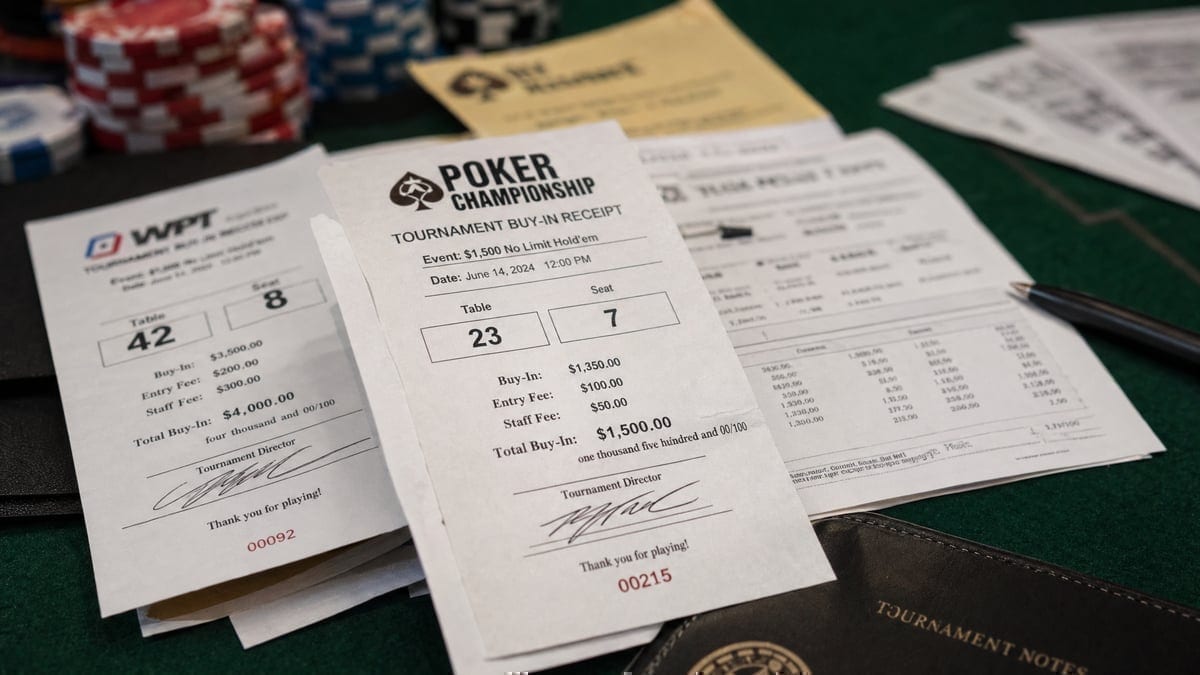
A typical high roller grinder plays 150-200 events annually. Average buy-in: $15,000. Do the multiplication.
That’s $2.25 to $3 million in buy-ins per year. Over a decade? We’re talking $20-30 million just to stay in action. And that’s conservative - guys like Peters often fire multiple bullets in the same event. The $100K events alone can drain seven figures annually.
Here’s where it gets spicy. Most high rollers aren’t playing on their own dime. The standard backing deal splits profits 50/50 after makeup. But makeup accumulates fast when you’re bricking $25Ks week after week.
One prominent backer (who asked to remain nameless) broke it down: “A player can have $10 million in lifetime cashes and still owe me money. That’s not unusual. That’s Tuesday.”
The Backing Game’s Dirty Secret
Remember when Fedor Holz retired at 23 with $32 million in tournament earnings? The retirement lasted about as long as you’d expect. Sources close to the German crusher suggest his actual profit was a fraction of that headline number.
Backing deals create weird incentives. Players chase variance in huge fields because they’re playing with house money. Backers want volume because eventually the math works out. Everyone pretends the Hendon Mob numbers mean something they don’t.
The Linde situation pulls back the curtain. When Peters allegedly owed “low-to-mid six figures” from their backing arrangement, it wasn’t because Peters was broke. It’s because high-stakes tournament poker operates on credit, handshakes, and the assumption that everyone will eventually catch a heater.
Why Nobody Talks About This
Sponsorships depend on those big numbers. “Daniel Negreanu, $51 million in tournament earnings” sells poker sites. “Daniel Negreanu, profitable but probably not by as much as you think” doesn’t quite have the same ring.
Plus there’s ego. Admitting you’re in makeup feels like admitting you’re not crushing. Even though every high roller has been there. Jason Koon once joked that makeup should be measured in millions, not thousands. He was only half-joking.
The economics get worse at the highest levels. Those $250K and $500K events? Pure marketing exercises. The player pool is maybe 30-40 regulars, all cross-backing each other in an incestuous money carousel. When someone wins, they’re often just reducing what they owe three other people at the same final table.
What This Means for Poker’s Future
The current model is unsustainable. We’re already seeing cracks.
Some high rollers are pivoting to cash games where the economics make more sense. Others are becoming selective, playing only the softest high-roller events instead of grinding the full circuit. A few have quietly retired, their “lifetime winnings” intact but their bank accounts telling a different story.
Triton’s new shot clock innovation? Part of that is making these events more TV-friendly to attract recreational money. The pros need fresh blood because they can’t keep swapping the same money forever.
The Uncomfortable Truth
Next time you see a headline about someone winning their third high roller of the year, do the math. Add up their buy-ins. Factor in the backing deal. Consider the taxes.
That $1.2 million score might net the player $200K after everything shakes out. Still good money, sure. But not quit-your-job-and-buy-an-island money.
The Peters-Linde drama forces a conversation the high-stakes community has avoided for years. These lifetime earning leaderboards we worship? They’re theater. Entertainment. Marketing.
This real story is in the spreadsheets nobody shares. In the makeup numbers that would make recreational players quit poker forever. In the quiet desperation of players one bad series away from owing seven figures to people who were their friends last month.
High-stakes tournament poker isn’t dying. But the myth around it might be. And honestly? That’s probably healthy. The game needs less fantasy and more honesty about what it costs to play at the top.
Even if that honesty stings.


