
The poker world has lost one of its most influential figures. David Sklansky, renowned as “The Mathematician” of poker, has died at the age of 78 in Las Vegas, according to reports from major poker news outlets. The three-time World Series of Poker bracelet winner and author of 18 gambling books transformed how players approach the game through his groundbreaking mathematical analysis.
Sklansky’s passing marks the end of an era for poker theory and education. His seminal work, “The Theory of Poker,” published in 1987, remains one of the most important texts in poker literature, introducing concepts that are now fundamental to modern strategy. The book made complex mathematical principles accessible to everyday players, forever changing how the game is studied and played.
The Mathematical Revolution
Sklansky’s contribution to poker went far beyond his tournament victories. He pioneered the application of rigorous mathematical analysis to poker strategy at a time when most players relied primarily on instinct and experience. His approach introduced concepts like expected value, pot odds, and the fundamental theorem of poker to mainstream audiences.
“He was famous for bringing math to the poker table and for making complex concepts accessible to the masses,” notes recent coverage of his passing. This accessibility was perhaps Sklansky’s greatest gift to the poker community. While other theorists might have kept their insights confined to academic circles, Sklansky wrote in a way that allowed recreational players to understand and apply advanced concepts.

His books covered a wide range of gambling topics beyond poker, including blackjack and general gambling theory. Each publication demonstrated his ability to break down complex probability and game theory into digestible lessons that players could immediately apply at the tables. This democratization of poker knowledge helped raise the overall skill level of the game worldwide.
Tournament Success and WSOP Glory
While Sklansky will be remembered primarily as a theorist and author, his practical poker skills were formidable. He captured three WSOP bracelets during the early 1980s, proving that his mathematical approach translated directly to tournament success. These victories came during poker’s pre-boom era, when fields were smaller but filled with seasoned professionals.
His tournament record speaks to the effectiveness of his analytical approach. In an era dominated by old-school road gamblers and instinct players, Sklansky’s mathematical precision gave him a significant edge. He demonstrated that poker success didn’t require years of experience reading tells or playing by feel – it could be achieved through disciplined application of mathematical principles.
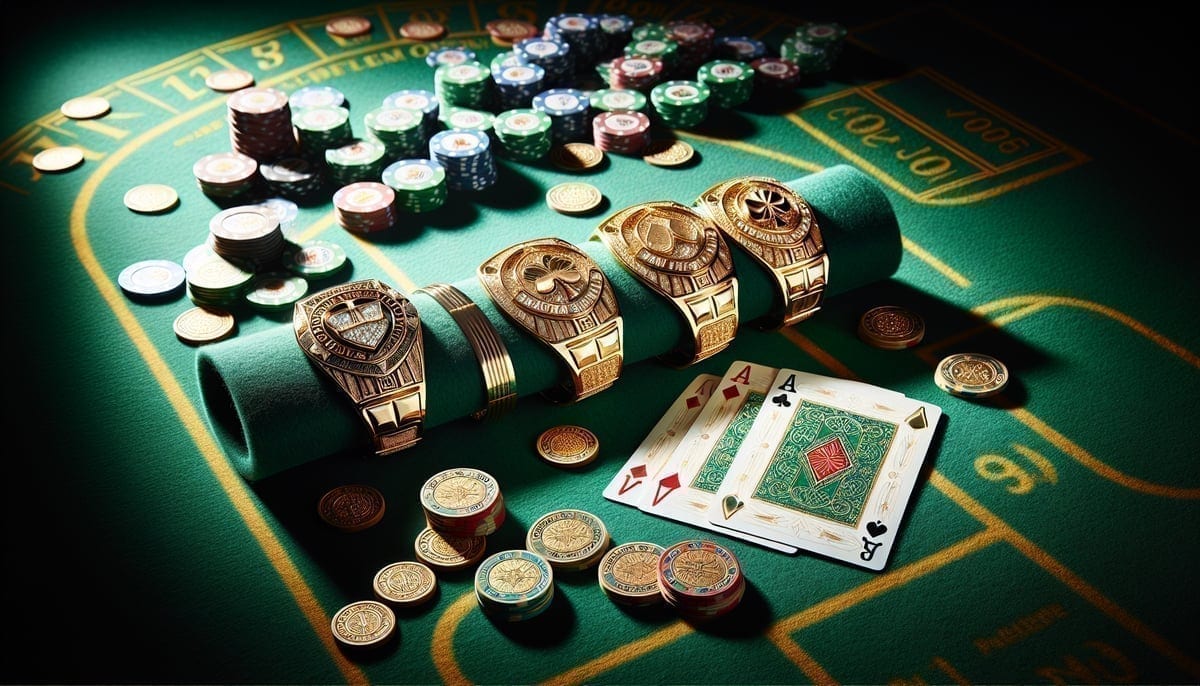
Beyond his bracelet wins, Sklansky maintained a presence in high-stakes cash games throughout his career, often playing against the biggest names in poker while continuing to refine and test his theories in real-world conditions.
A Complex Legacy
The reaction to Sklansky’s passing has revealed the complexity of his legacy within the poker community. While many celebrate his contributions to poker theory, others have shared mixed feelings about his personality and approach. Comments on social media have ranged from heartfelt tributes to his influence on their poker careers to more critical assessments of his character.
The Solve for Why podcast recently explored whether Sklansky should be considered “a hero or villain” in poker history, highlighting the polarizing nature of his legacy. This complexity is not uncommon among pioneering figures who challenge established norms and push boundaries in their fields.
Despite any personal controversies, Sklansky’s intellectual contributions to poker remain undeniable. His work laid the foundation for the modern game theory optimal (GTO) approach that dominates today’s high-level tournament play. Contemporary poker solvers and training sites owe a debt to the mathematical framework Sklansky established decades ago.
Impact on Modern Poker Education
Sklansky’s influence extends far beyond his own writings. He inspired a generation of poker authors, coaches, and content creators who built upon his mathematical foundation. Today’s poker training world, from strategy guides to solver technology, can trace its roots back to concepts Sklansky popularized.
Many of poker’s current educational leaders credit Sklansky’s work as fundamental to their understanding of the game. His systematic approach to analyzing poker situations created a template that modern instructors still follow. The proliferation of poker training sites, strategy forums, and educational content all stem from the path Sklansky blazed.
His books remain required reading for serious students of the game. Despite being written before the online poker boom, many of his concepts translate seamlessly to modern play. This timelessness speaks to the fundamental nature of his insights – he wasn’t teaching tricks or exploits, but rather the underlying mathematics that govern all forms of poker.
The Evolution of Poker Theory
Sklansky’s work came at a critical time in poker’s evolution. The 1980s and 1990s saw the game transitioning from smoky backrooms to legitimate casinos and eventually to the mainstream. His books provided intellectual legitimacy to a game often dismissed as pure gambling, demonstrating that poker involved complex decision-making based on mathematical principles.
This transformation was essential for poker’s growth. By establishing poker as a game of skill with quantifiable strategic elements, Sklansky helped pave the way for its acceptance in mainstream culture. The poker boom of the 2000s might not have been possible without the theoretical foundation he and other early authors established.
Modern players studying GTO concepts or using solver software are building on principles Sklansky articulated decades ago. While technology has advanced dramatically, the core mathematical truths he identified remain unchanged. His work serves as a bridge between poker’s old-school past and its high-tech present.
As the poker community reflects on Sklansky’s passing, his books will likely see renewed interest from players seeking to understand the roots of modern strategy. His legacy lives on not just in his written works, but in the mathematical approach to poker that has become standard at all levels of play. Future generations of players will continue to benefit from the foundation he built, even as the game evolves in ways he might never have imagined.


