
Alberta is poised to become Canada’s second province to offer regulated online poker, with the Alberta Gaming, Liquor and Cannabis Commission (AGLC) targeting a launch window between late Q2 and early Q3 of 2026. The development marks a significant expansion of Canada’s regulated online gambling market, following Ontario’s successful model that has generated over $2.8 billion in gaming revenue since April 2022.
Regulatory Framework Now Complete
The AGLC has finalized its legal and regulatory framework for online gambling, clearing the path for operators to begin submitting applications. According to regulatory sources, the commission expects to start receiving formal applications from interested operators within the next 30 days, with the evaluation process taking approximately 90-120 days per applicant.
Alberta’s approach differs from Ontario’s open-market model in several key aspects. The province plans to implement stricter responsible gaming measures, including mandatory deposit limits for the first 30 days of play and enhanced age verification protocols. These measures aim to address concerns raised by addiction specialists during the public consultation period that concluded in December 2025.
The regulatory framework also includes provisions for shared liquidity agreements with other Canadian provinces, though initial launches will likely feature Alberta-only player pools. This segregated approach mirrors the current situation in Ontario online poker, where players remain separated from international markets despite operator requests for broader liquidity sharing.
Market Opportunity and Revenue Projections
Industry analysts project Alberta’s online poker market could generate between $45-60 million in annual revenue within its first full year of operation. With a population of 4.5 million compared to Ontario’s 15 million, Alberta represents a smaller but still significant market opportunity for operators.
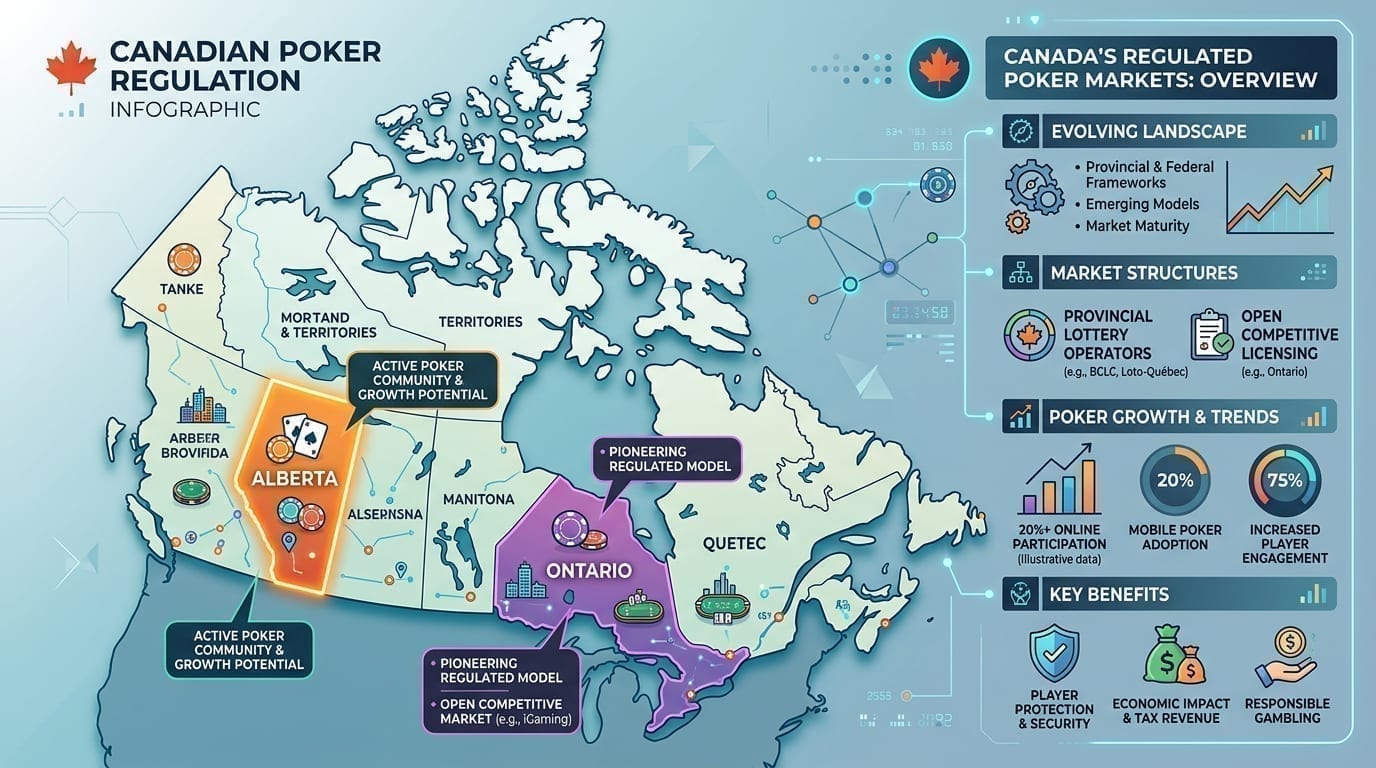
“Alberta’s demographics actually favor online poker adoption,” says Dr. Michael Harrison, a gaming industry analyst with Calgary-based Horizon Research. “The province has a younger median age than Ontario and higher disposable income levels. We’re seeing strong interest from both domestic and international operators.”
The province’s existing land-based poker scene, anchored by venues like Calgary’s Deerfoot Inn & Casino and Edmonton’s Grand Villa Casino, has maintained steady revenue despite the pandemic disruptions. This established player base provides a natural transition point for online offerings.
Operator Interest Builds Momentum
PokerStars, fresh from its merger with FanDuel in the US market, has already indicated strong interest in entering Alberta. The operator’s Canadian team has been actively recruiting Alberta-based staff and has posted multiple job openings for positions in Edmonton and Calgary.
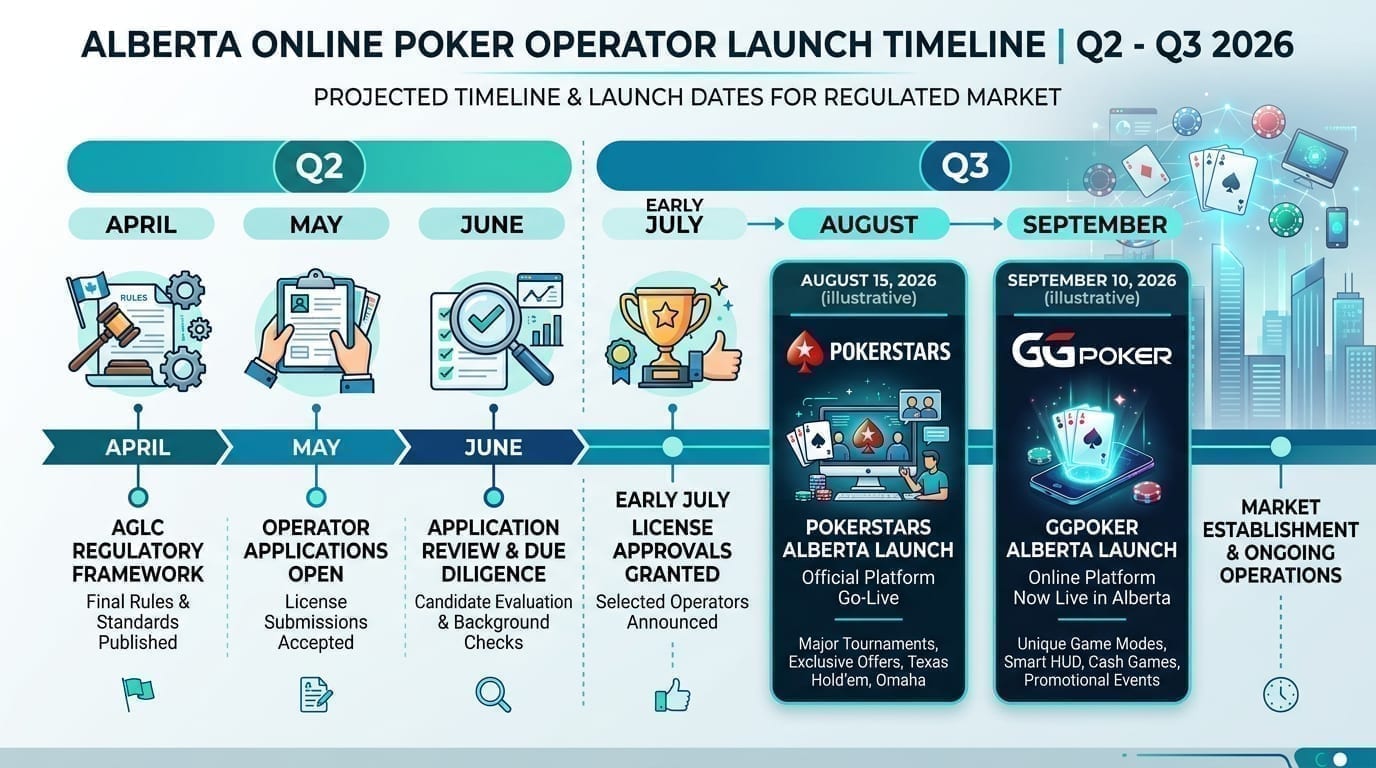
GGPoker, which recently celebrated five $1 million Spin & Gold jackpots in just four weeks, is also expected to apply for an Alberta license. The operator’s aggressive marketing approach and innovative game formats could connect with Alberta’s younger demographic.
Local operators are also preparing to defend their home turf. Pure Casino, which operates multiple locations across Alberta, has partnered with a yet-unnamed technology provider to develop its online platform. The company plans to use its existing customer database and loyalty program to capture market share quickly.
Technical Infrastructure and Player Experience
The AGLC has mandated that all operators maintain servers within Alberta’s borders, similar to requirements in other regulated jurisdictions. This requirement ensures data sovereignty and enables real-time monitoring of gaming activities by provincial regulators.
Operators will be required to implement geolocation technology that verifies players are physically located within Alberta when playing. The technology must be accurate within 50 meters and perform checks at least every 30 minutes during active sessions. These requirements mirror successful implementations in US regulated markets and Ontario.
The commission has also established technical standards for game fairness, requiring all random number generators to be certified by independent testing laboratories. Operators must maintain detailed logs of all gaming transactions for a minimum of five years, enabling thorough regulatory oversight.
Responsible Gaming Measures
Alberta’s approach to responsible gaming represents perhaps the most stringent framework in North America. Beyond mandatory initial deposit limits, the regulations require:
- Real-time spending alerts when players reach 50% and 75% of their daily limits
- Mandatory cool-off periods after three consecutive hours of play
- Integration with the provincial self-exclusion database
- Prominent display of problem gambling resources on all screens
- Monthly player statements showing wins, losses, and time spent playing
These measures go beyond what’s currently required in Ontario or most US states, reflecting Alberta’s commitment to balancing market expansion with player protection.
Tax Structure and Revenue Sharing
The province has set online gaming tax rates at 15% of gross gaming revenue, significantly lower than the 20% rate in Ontario. This competitive tax structure aims to attract operators while ensuring meaningful contributions to provincial coffers.
Revenue from online gambling will be directed to the Alberta Lottery Fund, which supports thousands of volunteer, public and community-based initiatives annually. The government estimates online gambling could contribute an additional $50-75 million annually to these programs once the market matures.
Challenges and Timeline Considerations
Despite the optimistic timeline, several challenges could impact the Q2-Q3 launch window. First Nations gaming rights remain a complex issue, with several tribes expressing concern about online gambling’s impact on their land-based operations. The AGLC continues negotiations to ensure First Nations participation in the online market.
Technical integration represents another potential hurdle. Unlike Ontario, which benefited from iGaming Ontario’s centralized approach, Alberta operators will need to integrate directly with multiple provincial systems. This includes responsible gaming databases, payment processing networks, and regulatory reporting platforms.
The timeline could also be affected by the pace of application processing. With an expected 8-12 operators seeking licenses, the AGLC’s resources may be stretched, potentially pushing some launches into Q4 2026.
As Alberta prepares to join Canada’s regulated online poker market, the province’s balanced approach between market growth and player protection could serve as a model for other provinces considering similar moves. British Columbia and Quebec have both indicated they’re closely monitoring Alberta’s implementation, suggesting Canada’s online poker market could see further expansion in 2027 and beyond. For players seeking advanced strategy resources to prepare for these new markets, the coming months offer an exciting opportunity to sharpen skills ahead of increased competition.


