
The tension starts building the moment you open Twitter. Paul Seaton drops his op-ed about Hendon Mob rankings and suddenly everyone’s got an opinion. Should the world’s biggest tournament poker database show actual profits instead of just raw winnings?
Since debate ignites around a simple but explosive question: when we see a player sitting at $5 million in tournament earnings, how much did they actually spend getting there? Seaton argues the current system - showing only gross winnings - creates a distorted picture of success in tournament poker.
The Current System Under Fire
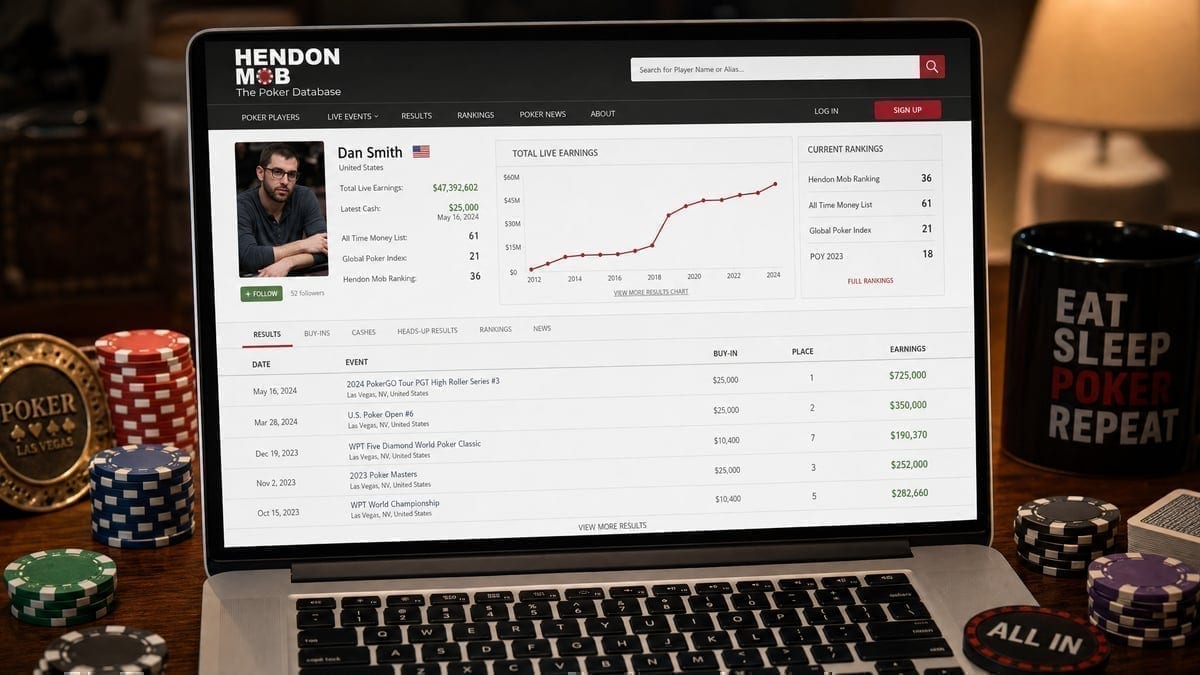
Right now, Hendon Mob displays cumulative tournament cashes without accounting for buy-ins. A player could theoretically lose millions while their profile shows them as a tournament crusher. It’s like measuring a business by revenue alone, ignoring expenses completely.
Seaton’s piece struck a nerve because it challenges poker’s most sacred scoreboard. The Hendon Mob rankings have become gospel in tournament circles - sponsors check them, media quotes them, players build their entire brands around those numbers.
But the criticism runs deeper than simple accounting.
“We’re celebrating the wrong things,” one pro told me over coffee at Commerce Casino. “Kids see these huge lifetime earnings and think everyone’s printing money. Nobody talks about the grind, the variance, the actual math.”
Why Change Faces Massive Resistance
The pushback came swift and fierce.
Many pros argue that showing net profits would expose sensitive financial information. Tournament poker operates on a complex web of backing deals, swaps, and staking arrangements. A player showing $2 million in profits might actually be keeping 20% after paying backers.
There’s also the data problem. Hendon Mob tracks results going back decades, long before anyone kept detailed buy-in records. Retroactively adding expenses would be impossible for most historical data.
And then there’s ego. Poker has always been about the glory of the big score, not the grind of grinding out small edges. Changing the scoreboard changes the game’s entire mythology.
Some established pros worry about their marketability. “My sponsorship deals are based on those Hendon numbers,” admitted one European regular who requested anonymity. “You think sponsors want to hear I’m actually break-even over my career?”
The Middle Ground Nobody’s Discussing
A few voices suggest compromise solutions. Maybe show both numbers - gross winnings and total buy-ins - letting viewers do their own math. Or create separate leaderboards for different metrics.
But even these moderate proposals face technical hurdles.
Tracking buy-ins accurately would require players to self-report or tournaments to share data they currently keep private. Neither seems likely in poker’s notoriously secretive ecosystem.
The debate mirrors larger questions about transparency in poker. While cash game players on streams like Hustler Casino Live show their actual buy-ins and results, tournament poker clings to its carefully curated image of endless victory laps.
What This Really Means for Poker’s Future
The Hendon Mob controversy reveals poker’s identity crisis. Is it a sport where we celebrate excellence? Or a gambling arena where only bottom-line profits matter?
Younger players seem more open to transparency. They’ve grown up with GTO solvers and expected value calculations. For them, understanding the real economics isn’t shameful - it’s essential.
But the old guard built their reputations in a different era. An era where mystique mattered more than mathematics.
The timing feels significant. With operators like GGPoker and PokerStars pushing for mainstream acceptance, poker faces pressure to present itself more professionally. Transparent financial reporting might be part of that evolution.
Or it might destroy the very mythology that makes poker compelling to recreational players.
One thing’s becoming clear as the debate rages on - this conversation isn’t going away. The next generation of poker players might demand a different kind of scoreboard. Whether Hendon Mob adapts or gets replaced by something new, the way we measure poker success is changing.
The database that defined tournament poker for two decades now faces its biggest challenge yet. Not from a competitor, but from the community asking a simple question: shouldn’t we know the whole truth?


