
DraftKings has watched its ambitious Electric Poker format collapse from a promising innovation to a cautionary tale, with player numbers plummeting by 95% in just 18 months. The lightning-fast poker variant, which forces all players to go all-in after just three blind levels, has seen its revenue drop to a mere 5% of its initial launch figures across Michigan, Pennsylvania, and New Jersey.
The Rise and Rapid Fall
Electric Poker burst onto the scene in late 2024 with significant fanfare, promising to revolutionize online poker with its accelerated gameplay and guaranteed action. The format’s unique selling point was its lightning-fast blind structure combined with a mandatory all-in rule that kicks in after just three levels of play, ensuring games conclude quickly and decisively.
Initial reception was positive, with curious players flooding the tables to experience this new twist on traditional poker. DraftKings heavily promoted the format as a solution for time-pressed players who wanted poker action without lengthy sessions. The operator invested substantial marketing dollars, featuring the game prominently in their poker client and running special promotions to attract players.
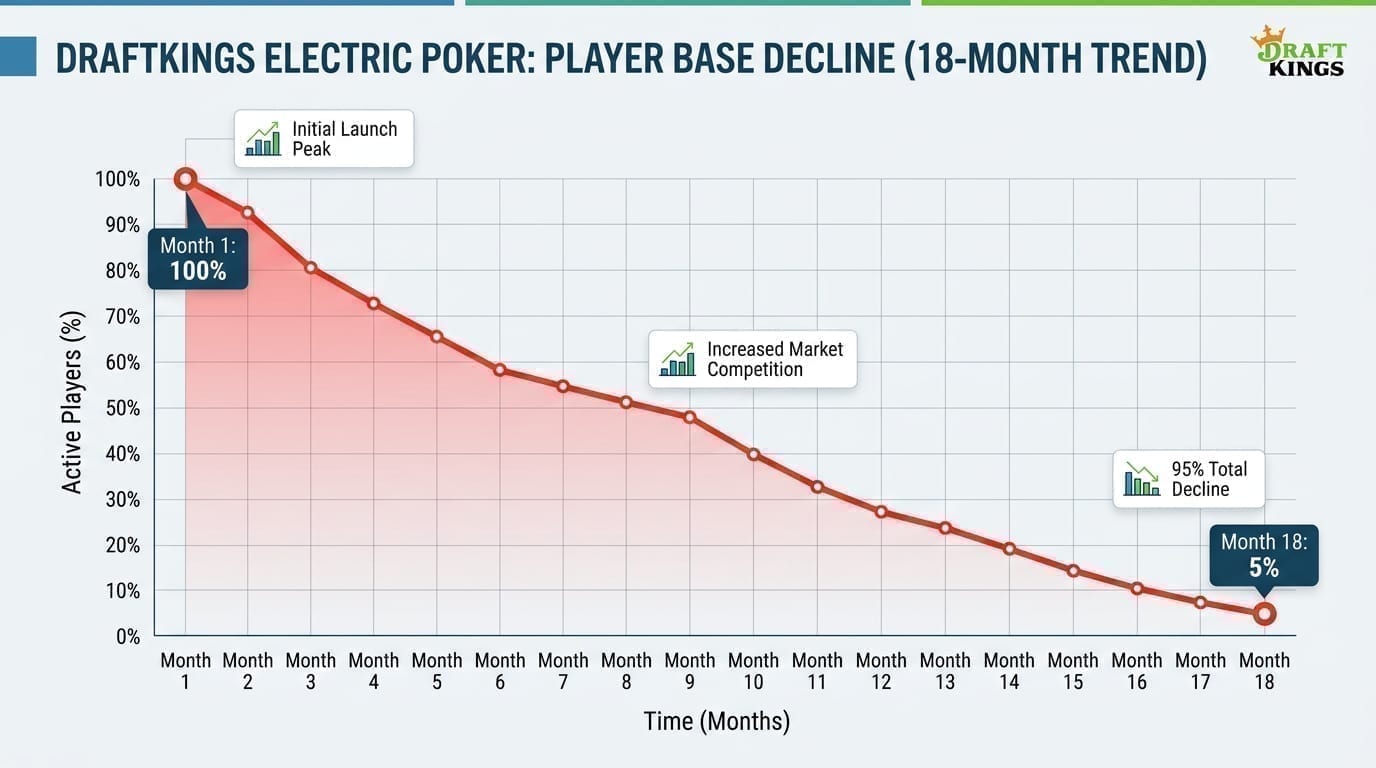
But what started as innovation quickly turned into alienation. Player retention rates began declining sharply within the first few months, and by the 18-month mark, the format retained only 5% of its peak player base. Revenue figures paint an equally grim picture, with Electric Poker now generating a fraction of what DraftKings initially projected.
The Fatal Flaw: Mandatory All-In Format
The core mechanic that DraftKings believed would set Electric Poker apart eventually became its downfall. Unlike traditional tournament poker where skilled players can work through different stages using various strategies, Electric Poker’s forced all-in mechanism removes key decision-making elements that many players value.
“The mandatory all-in format essentially turns poker into a lottery after three levels,” notes one regular player who abandoned the format after initial experimentation. “There’s no room for post-flop play, no opportunity to outmaneuver opponents, and minimal skill edge in the long run.”
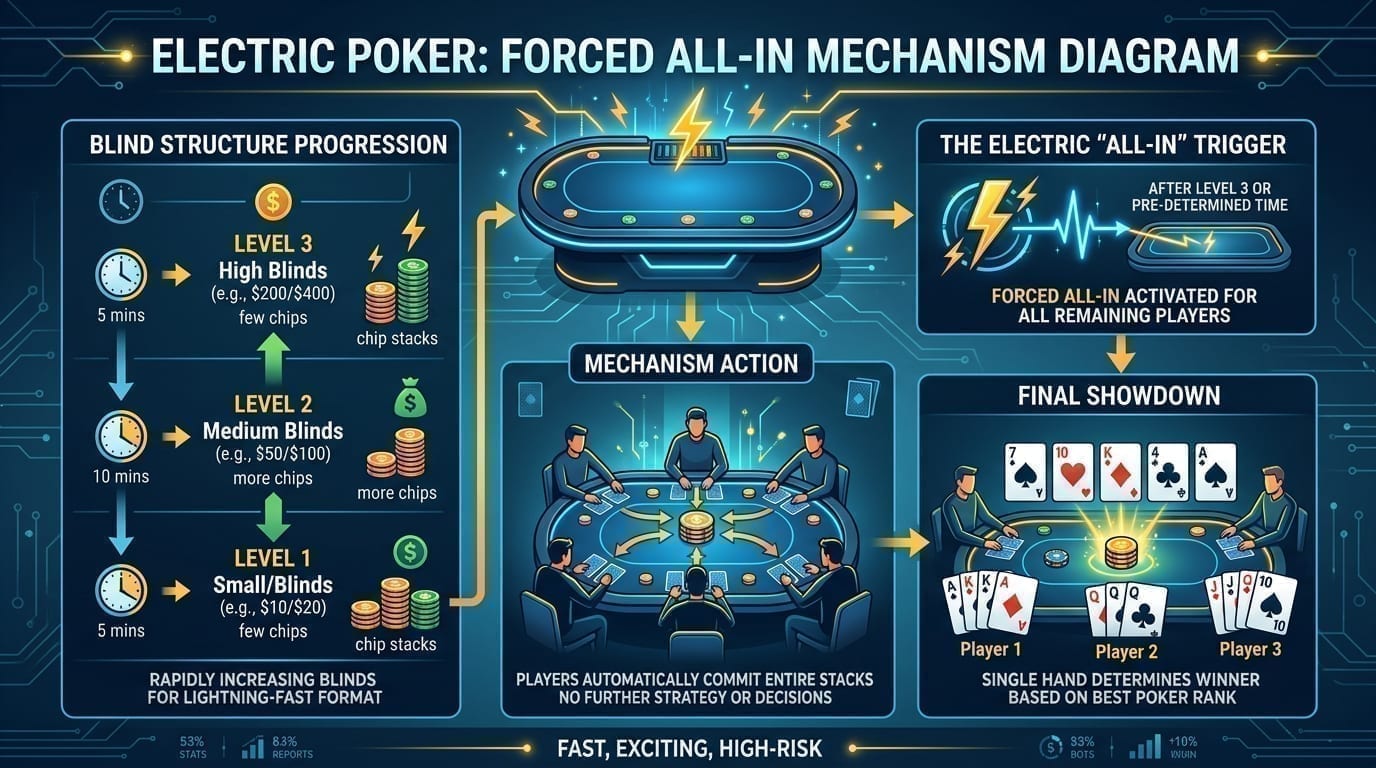
This criticism strikes at the heart of what makes poker appealing to many players. While variance is always a factor in poker, the ability to minimize it through skilled play over time is what distinguishes poker from pure gambling. By forcing all-in situations, Electric Poker removed this critical element, essentially creating a high-variance coin flip scenario that frustrated serious players and casual enthusiasts alike.
Market Performance Across States
DraftKings launched Electric Poker in Michigan, Pennsylvania, and New Jersey, hoping to capture market share in these established online poker jurisdictions. Each state showed similar patterns of initial enthusiasm followed by steep decline:
- Michigan: Saw the highest initial adoption rate but also experienced the sharpest decline, with player numbers dropping 92% within the first year
- Pennsylvania: Maintained slightly better retention initially but still lost 93% of its player base by the 18-month mark
- New Jersey: The most mature market showed the most resistance to the format from the start, with many players returning to traditional formats on PokerStars and other platforms
The cross-state performance data suggests that the format’s problems were fundamental rather than market-specific. Players consistently cited the same issues regardless of location: excessive variance, lack of strategic depth, and frustration with the forced all-in mechanism.
Player Feedback and Industry Response
The poker community’s response to Electric Poker’s decline has been mixed, with some viewing it as a failed experiment while others see valuable lessons for future innovation. Professional players and poker influencers have been particularly vocal about the format’s shortcomings.
Many compare Electric Poker unfavorably to successful fast-fold formats like Zoom Poker or Rush Poker, which accelerate gameplay without fundamentally altering poker’s strategic elements. These formats have maintained healthy player pools because they speed up the action while preserving the game’s skill-based nature.
Industry analysts point to Electric Poker as an example of innovation for innovation’s sake, where the desire to create something new overshadowed understanding what players actually want. The format’s failure has sparked discussions about the importance of player testing and feedback before launching major changes to established games.
Lessons for the Online Poker Industry
Electric Poker’s dramatic decline offers several important lessons for online poker operators considering innovative formats:
- Preserve skill elements: Formats that reduce poker to pure chance alienate the core player base who value strategic depth
- Test thoroughly: Extended beta testing with real player feedback could have identified the format’s fatal flaws before full launch
- Innovation should enhance, not replace: Successful innovations like fast-fold poker enhanced the existing game rather than fundamentally changing it
- Understand your audience: Serious poker players make up the backbone of sustainable poker ecosystems and cannot be ignored
The failure also highlights the challenge of innovating in a mature market. While operators need to differentiate themselves and attract new players, they must balance this with maintaining the elements that make poker compelling to existing players.
What’s Next for DraftKings Poker
With Electric Poker’s failure now evident, DraftKings faces important decisions about its poker offering. The operator has remained relatively quiet about the format’s poor performance, neither announcing plans to discontinue it nor committing to improvements.
Industry insiders speculate that DraftKings may quietly phase out Electric Poker while refocusing on traditional formats and established innovations. The company’s poker revenue has undoubtedly been impacted by Electric Poker’s failure, potentially affecting future investment in poker products.
Some suggest DraftKings could salvage elements of Electric Poker by making the all-in mechanism optional or extending the number of levels before it triggers. Still, such changes might be too little, too late for a format that has already lost player trust.
The Future of Poker Innovation
Despite Electric Poker’s failure, the need for innovation in online poker remains. The industry continues to face challenges in attracting new players while retaining existing ones. Successful operators will need to find ways to modernize poker without destroying its fundamental appeal.
Several operators are exploring different approaches to innovation, from improved mobile experiences to AI-powered training tools and social features. The key lesson from Electric Poker’s demise is that any innovation must enhance rather than replace poker’s core strategic elements.
As the online poker industry continues to evolve, Electric Poker will likely be remembered as a cautionary tale about the dangers of over-innovation. While DraftKings deserves credit for trying something new, the format’s spectacular failure demonstrates that not all change is progress. The challenge for operators moving forward will be finding the sweet spot between innovation and tradition, creating new experiences that excite players without alienating the dedicated community that keeps online poker thriving.


