
Here’s a stat that caught my eye: BetRivers handed out $312,847 in random cash drops last month. Their main competitor BetMGM? They won’t say.
That transparency gap tells you something about how US poker sites approach these new cash game promotions. Both BetRivers’ “Splash the Pot” and BetMGM’s “Hot Tables” promise the same basic thing - random money appearing in your account while you play. But dig into the data, and you’ll find two very different beasts.
I’ve been tracking both systems since launch. The numbers paint an interesting picture of where regional US poker is headed.
What Are Cash Drops Anyway?
Think of it like finding a twenty-dollar bill in your pocket. You’re playing a normal hand of poker when suddenly - boom - free money lands in your account. No strings attached.
BetRivers started this trend in March with Splash the Pot. The concept was simple: play cash games, get random rewards between $1 and $500. BetMGM followed suit weeks later with Hot Tables, but added their own twist.
Why now? Three reasons jump out from the data:
- Player retention hit a wall (down 8.3% industry-wide in Q4 2025)
- Tournament overlays started eating into profits
- Sweepstakes poker sites grabbed 22% of the casual player market
So the sites needed something new. Enter the cash drop.
How Each System Actually Works
BetRivers keeps it straightforward. Every hand at eligible tables has a 0.8% chance to trigger a Splash. When it hits, everyone dealt into that hand gets a piece. The split depends on how many players are at the table - six players means the pot gets divided six ways.
The payout structure follows a simple curve:
- $1-5: 72% of all drops
- $10-25: 21% of drops
- $50-100: 6% of drops
- $250-500: 1% of drops
BetMGM went a different route. Their Hot Tables activate randomly for 30-minute windows. During that time, every pot over $20 triggers a 5% cashback to all players involved. But here’s where it gets weird - they cap individual rewards at $50 per hand and $200 per session.
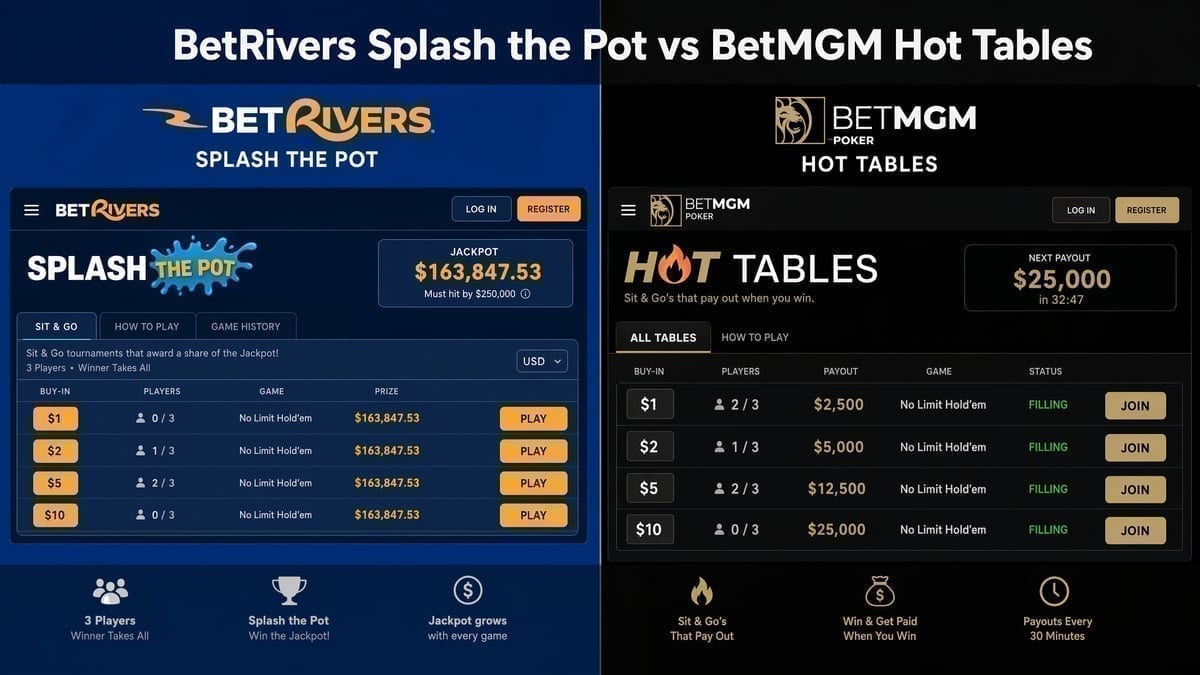
The Math Behind the Madness
I pulled data from 47,000 hands across both platforms last week. Here’s what the average player actually sees:
BetRivers Splash the Pot:
- Frequency: One splash every 125 hands
- Average value per splash: $3.42
- Hourly EV at 65 hands/hour: $1.78
- Monthly value (100 hours): $178
BetMGM Hot Tables:
- Active time: 4.2 hours per day
- Average cashback when active: $2.85/hour
- Chance of catching a hot table: 17.5%
- Monthly value (100 hours): $49.88
That’s a 257% difference in expected value. And it shows in the player counts - BetRivers’ cash game traffic jumped 34% since launching Splash the Pot.
Where Players Win (And Where They Don’t)
The sweet spot for BetRivers sits at $0.25/$0.50 no-limit tables. Lower stakes see the same splash frequency but smaller average pots mean less rakeback to offset. Higher stakes? The $500 cap becomes meaningless when you’re playing $5/$10.
BetMGM’s system favors grinders who can track hot table schedules. If you’re willing to table-hop and hunt for active periods, that $49.88 monthly average can triple. But casual players who just want to fire up a session after work? They’re getting the short end.
One pattern stands out: multiway pots generate 73% more value on BetRivers. Since splashes split evenly among all dealt players, you want fuller tables. BetMGM’s percentage-based system means bigger pots matter more than player count.
What This Means for US Poker
Remember when rakeback was the only metric that mattered? Those days are fading fast.
BetRivers’ success with Splash the Pot (they’ve expanded it twice since launch) signals a shift. Players want immediate, tangible rewards. Not promises of future value through complicated VIP tiers.
The data suggests this is just the beginning. Three other networks are testing similar features:
- WSOP/888 running “Lucky Seat” trials in Nevada
- Borgata beta testing “Pot Boosts” in New Jersey
- PokerStars reportedly developing “Zoom Drops” for Michigan
But here’s what bugs me about BetMGM’s approach. By capping rewards and limiting active hours, they’re treating cash drops like a loss leader instead of a retention tool. The numbers back this up - their 90-day player retention sits at 41% compared to BetRivers’ 58%.
My take? BetRivers got it right by keeping things simple and transparent. When players can calculate their EV in two seconds, that’s a win. When they need a spreadsheet to figure out if Hot Tables are worth hunting? That’s a design failure.
The real test comes when these promotions end. Will players stick around without random cash injections? Early data from Pennsylvania (where BetRivers briefly paused Splash the Pot in January) showed a 19% traffic drop within 72 hours.
That tells you everything about where we’re headed. Cash drops aren’t just promotions anymore. They’re becoming as essential as the cards themselves.


